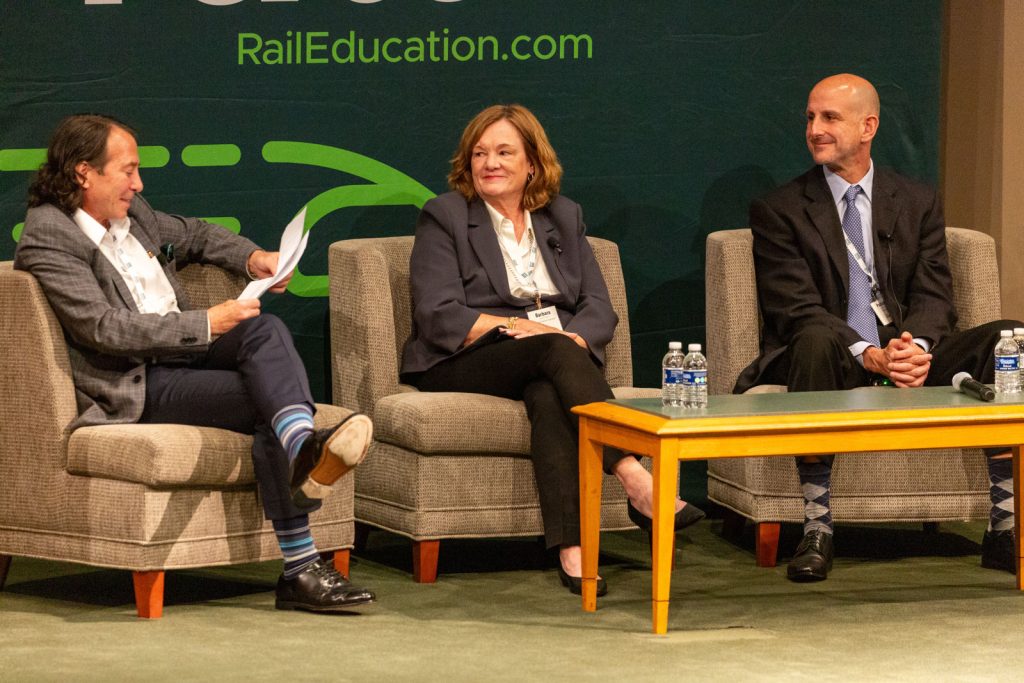
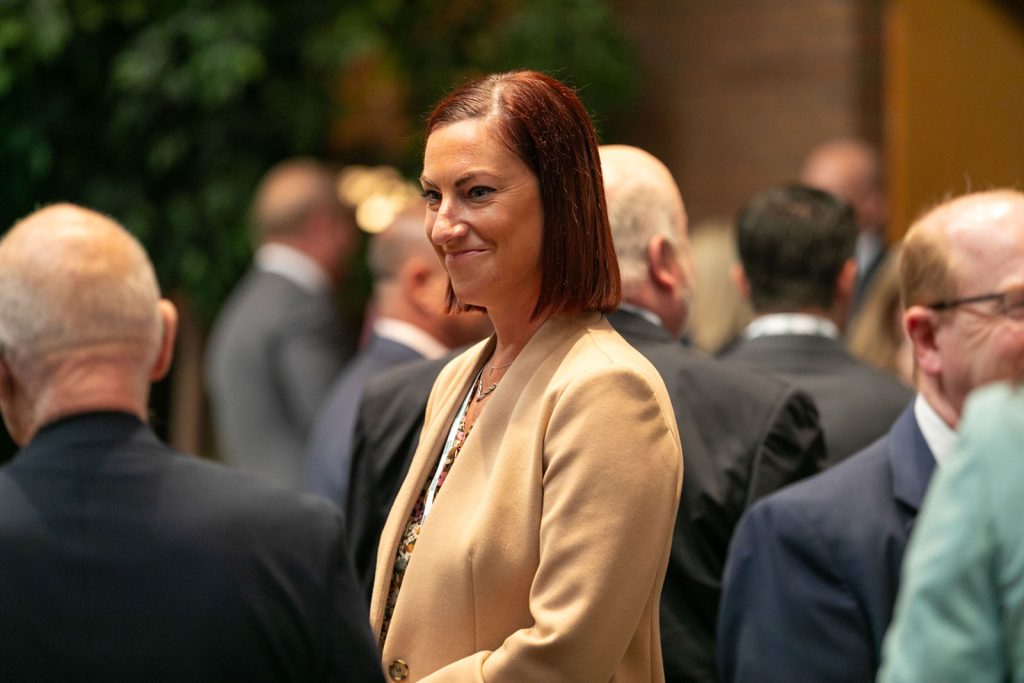
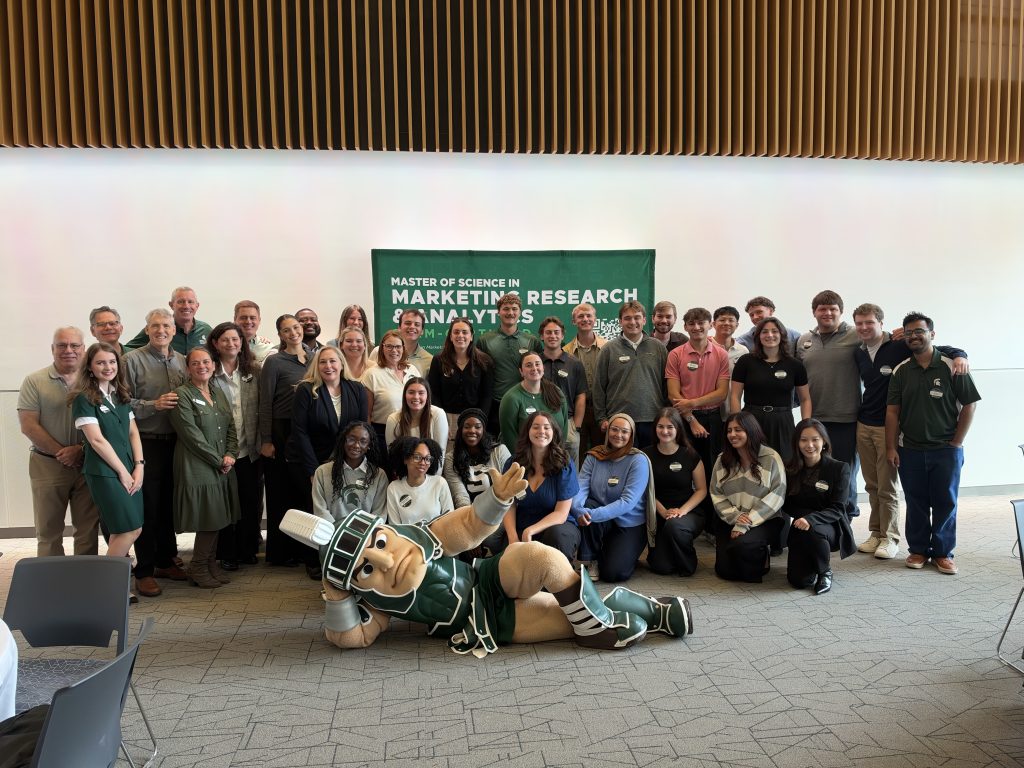
The event opened with a welcome reception and a “State of the Rail Industry” discussion led by rail analyst Tony Hatch of ABH Consulting. The following morning, attendees heard opening remarks from Val Kucherenko, director of rail education at the Broad College of Business, who emphasized the conference theme of safety, innovation, and workforce development. Dean David Souder then delivered the opening keynote, “Developing the Next Generation of Rail Leaders,” highlighting the importance of educational partnerships and leadership development in an evolving transportation environment.
A major focus throughout the conference was the long-term financial and operational direction of the North American rail industry. Ian Jefferies, president and CEO of the Association of American Railroads, provided an industry update during the conference’s general session, while subsequent panels examined the evolution of rail finance, equipment investment, and ownership structures. Discussions featured leaders from Oliver Wyman, Railroad Financial Corporation, Trinity Rail, and other major organizations, all examining how railroads can continue balancing operational efficiency with sustainable growth.
Another highlight of the conference was the panel discussion on short line and regional railroads, moderated by Chuck Baker, president of the American Short Line and Regional Railroad Association (ASLRRA). Panelists Michael Stickel, president and CEO of Lake State Railway Company, Peter Gilbertson, president and CEO of Anacostia Rail Holdings Company, and Justin Broyles, president and CEO of R. J. Corman Railroad Group, shared compelling growth stories from their organizations and offered insights into the unique role short line railroads play within the broader freight transportation network. The discussion highlighted how each company has successfully innovated, remained agile in a changing marketplace, and maintained strong financial performance while expanding service offerings and business portfolios. Panelists also emphasized the importance of strategic partnerships with Class I railroads, demonstrating how close collaboration across the rail ecosystem creates opportunities for growth, improved service, and enhanced connectivity for customers throughout North America.
One of the conference’s defining themes centered on the rail industry’s increasing need to shift from operating-ratio-driven strategies toward long-term volume growth. Retired rail leaders and analysts repeatedly emphasized that future success will depend not only on efficiency, but also on expanding rail’s role in the North American freight economy. These discussions aligned closely with themes later highlighted in coverage by Trains Magazine, which examined concerns from retired Class I executives regarding growth stagnation and the limitations of an excessive focus on operating ratio performance.


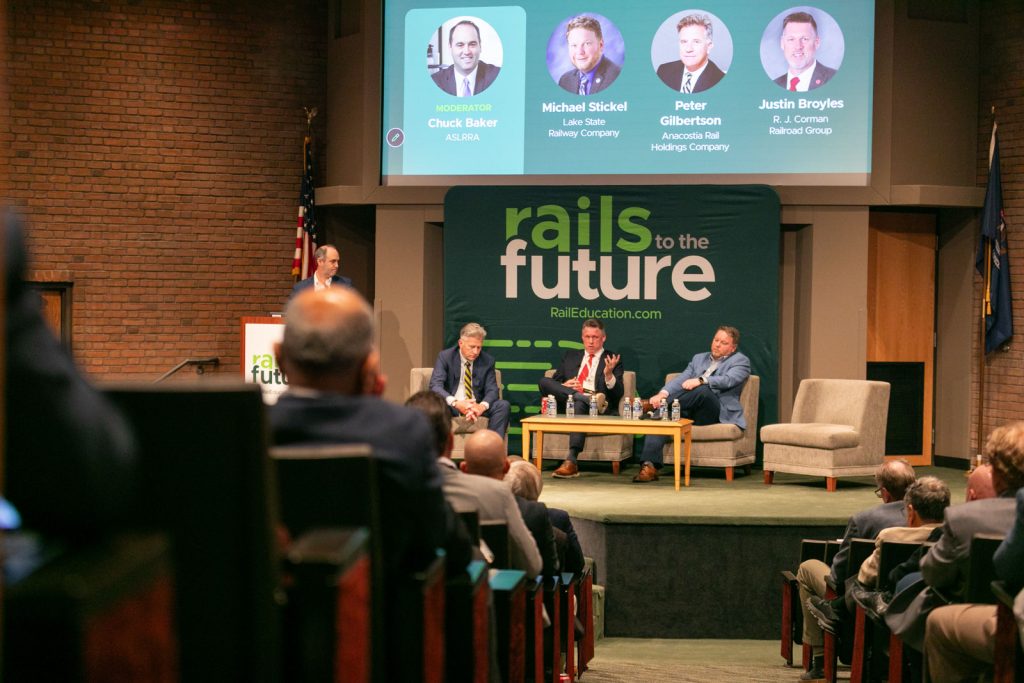 Three panelists during a round table speaking about the impacts of railway change.
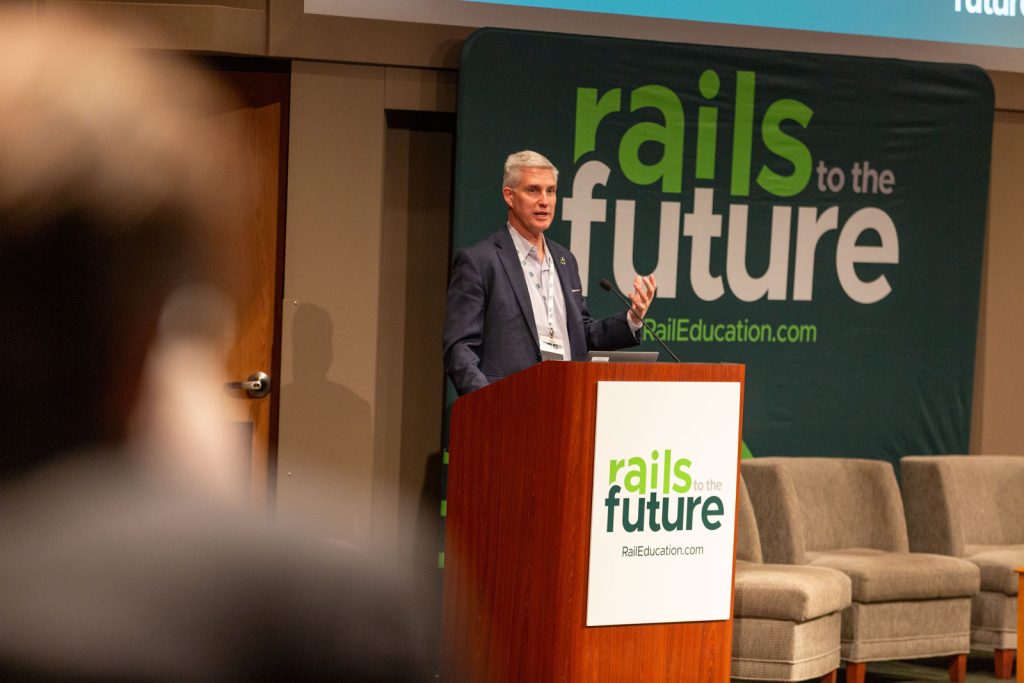 Dean David Souder addressing the audience during "rails to the future conference"