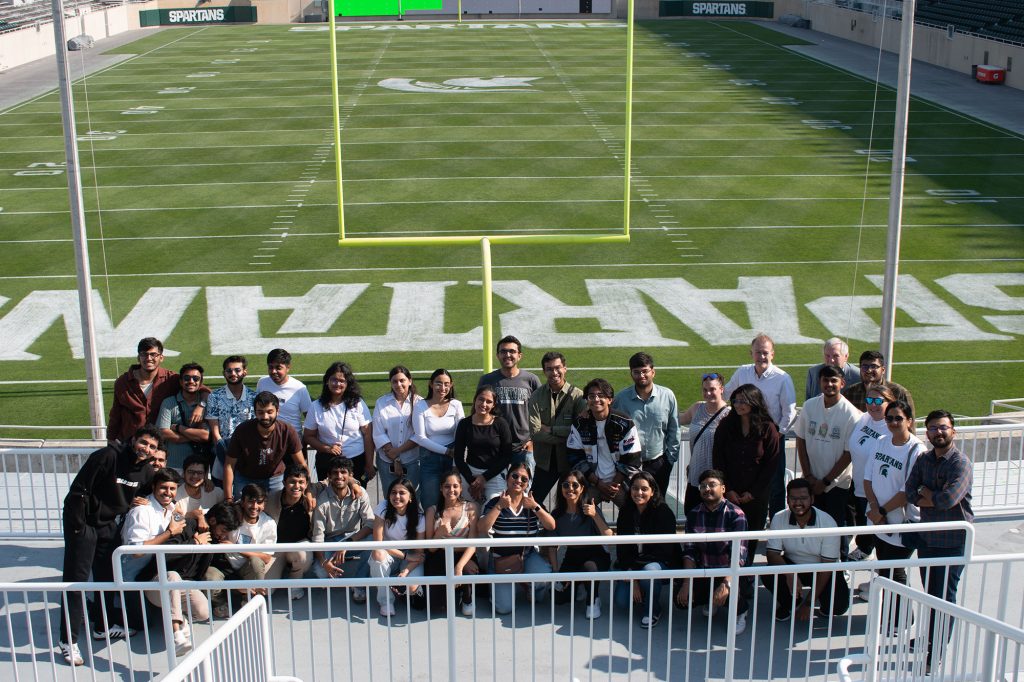
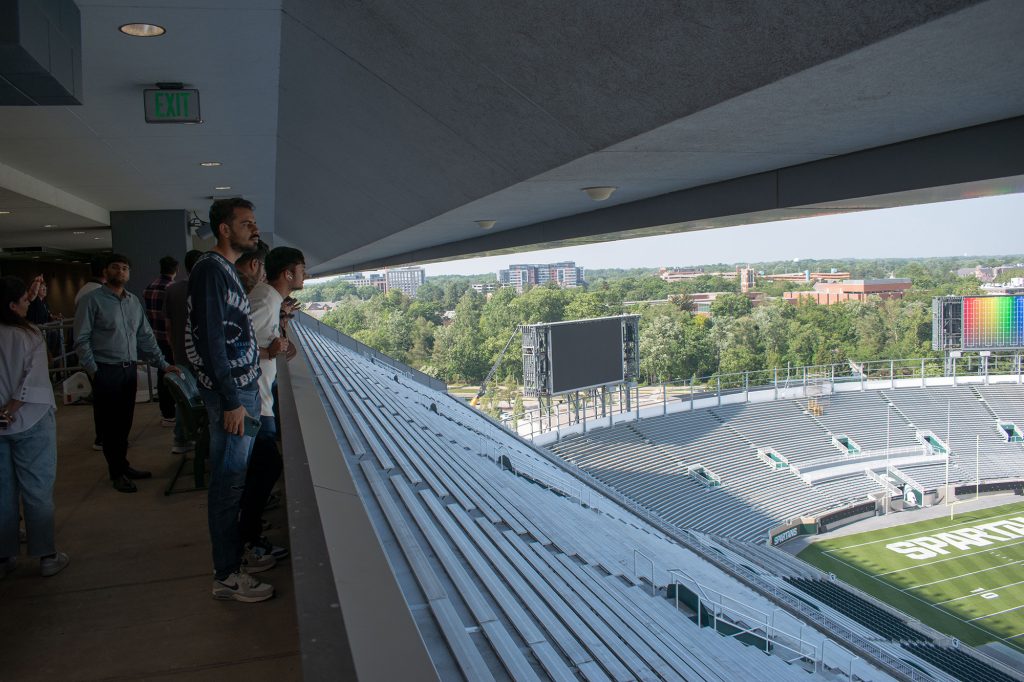
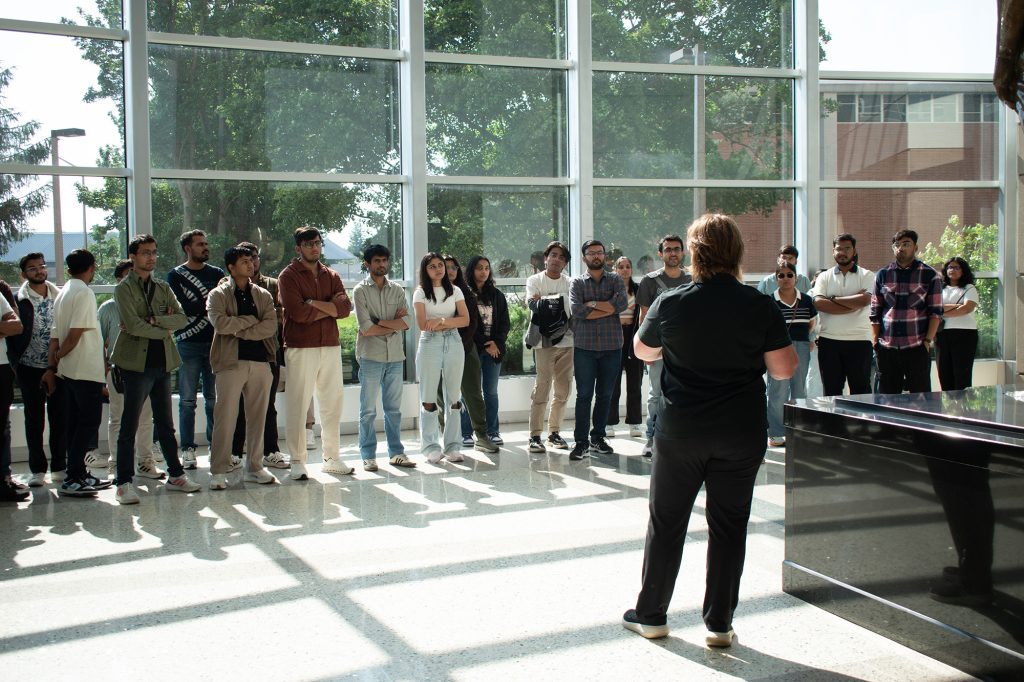
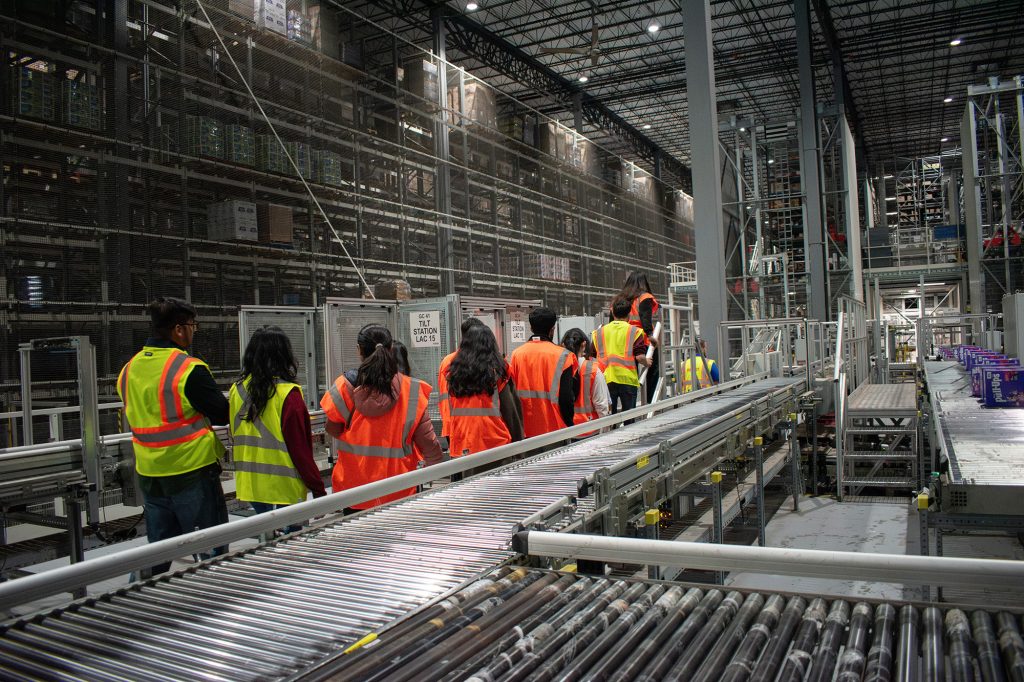
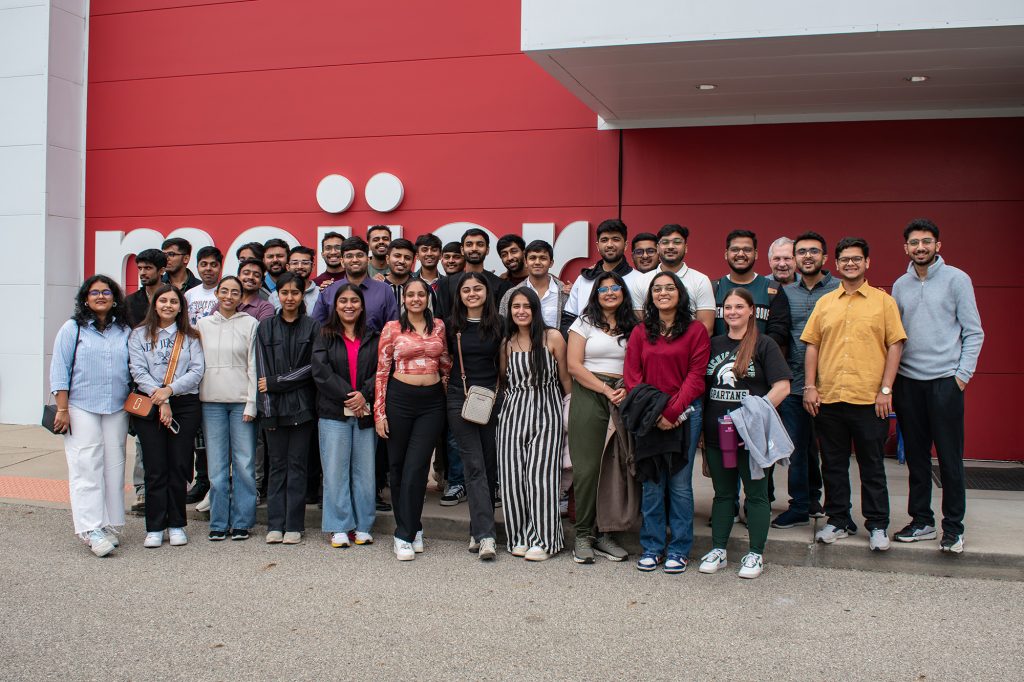
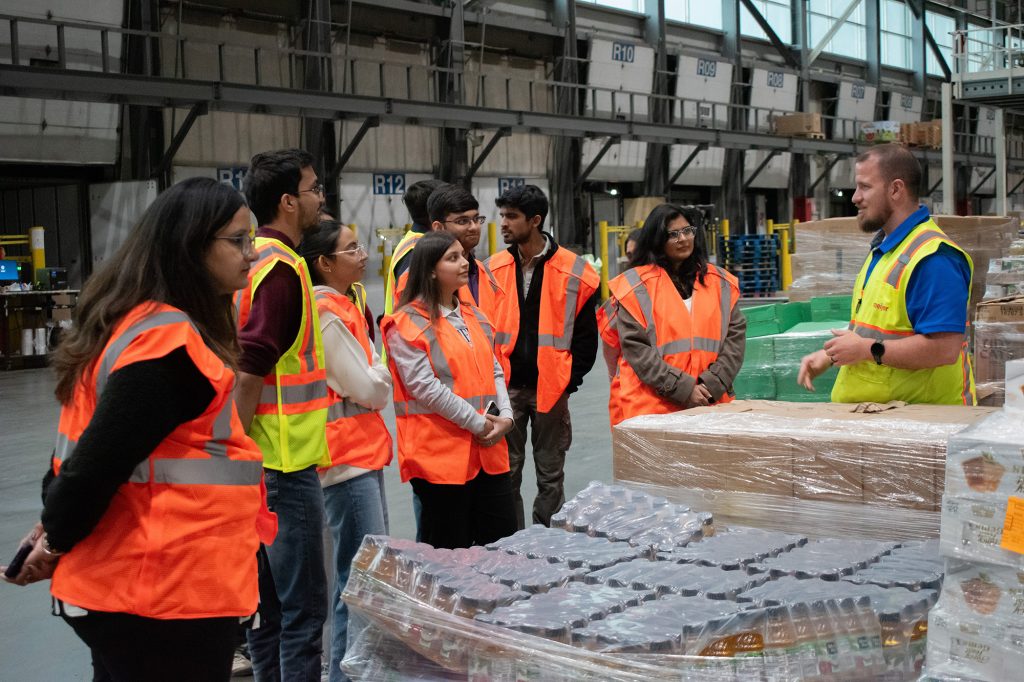
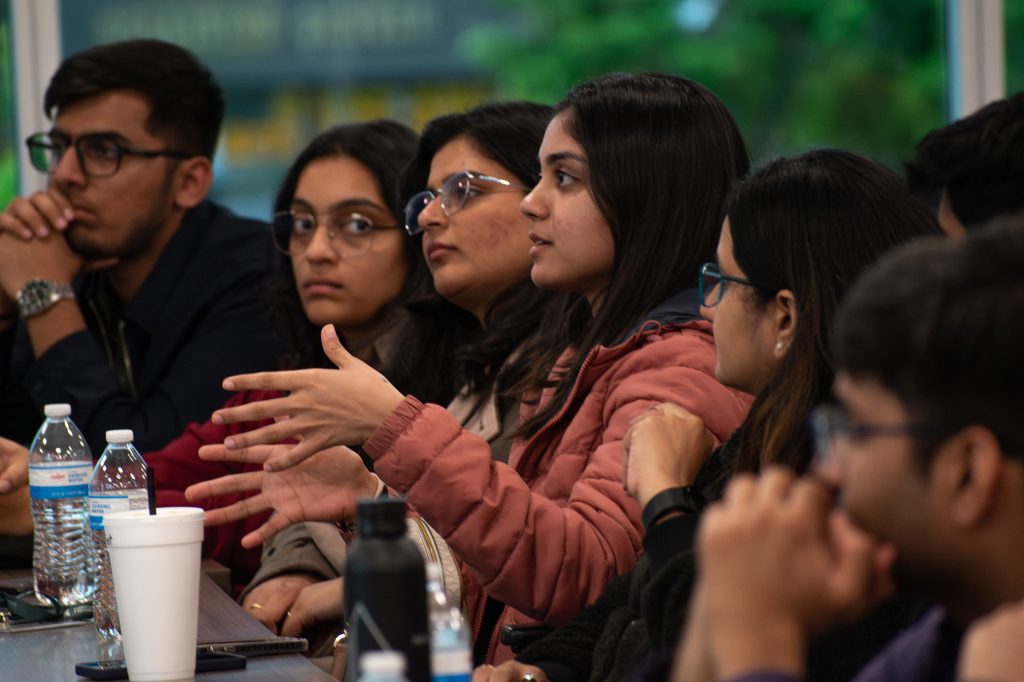
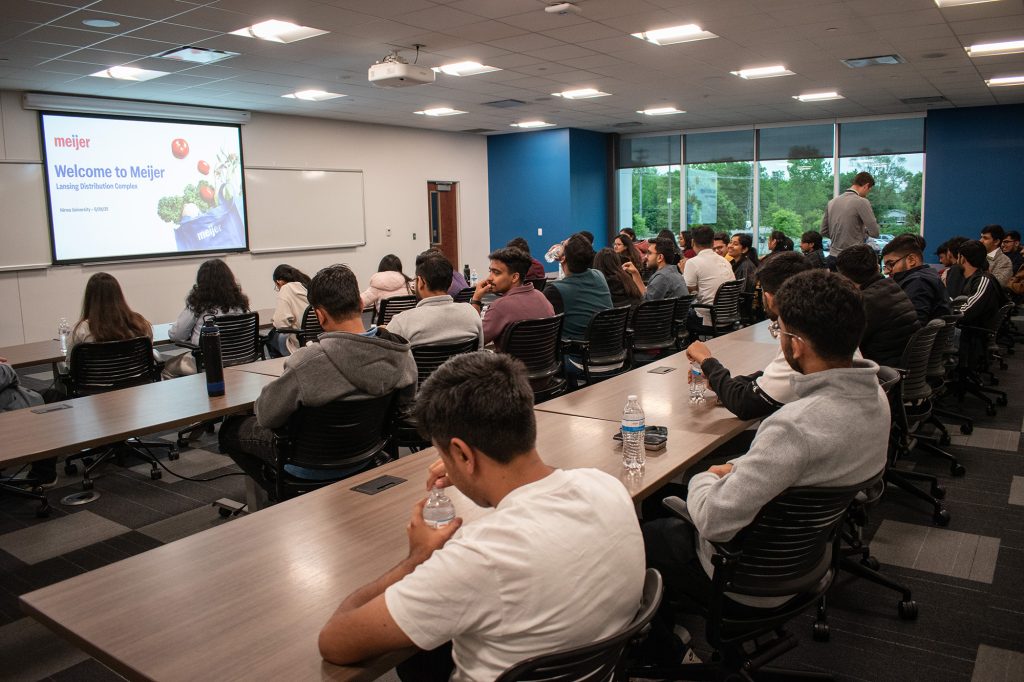
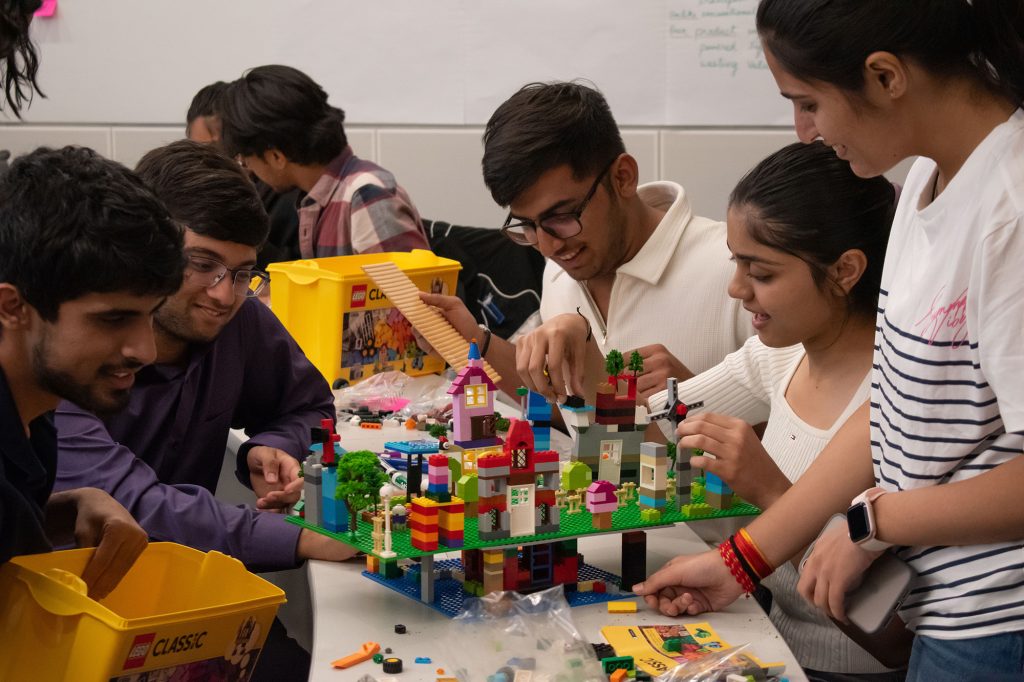
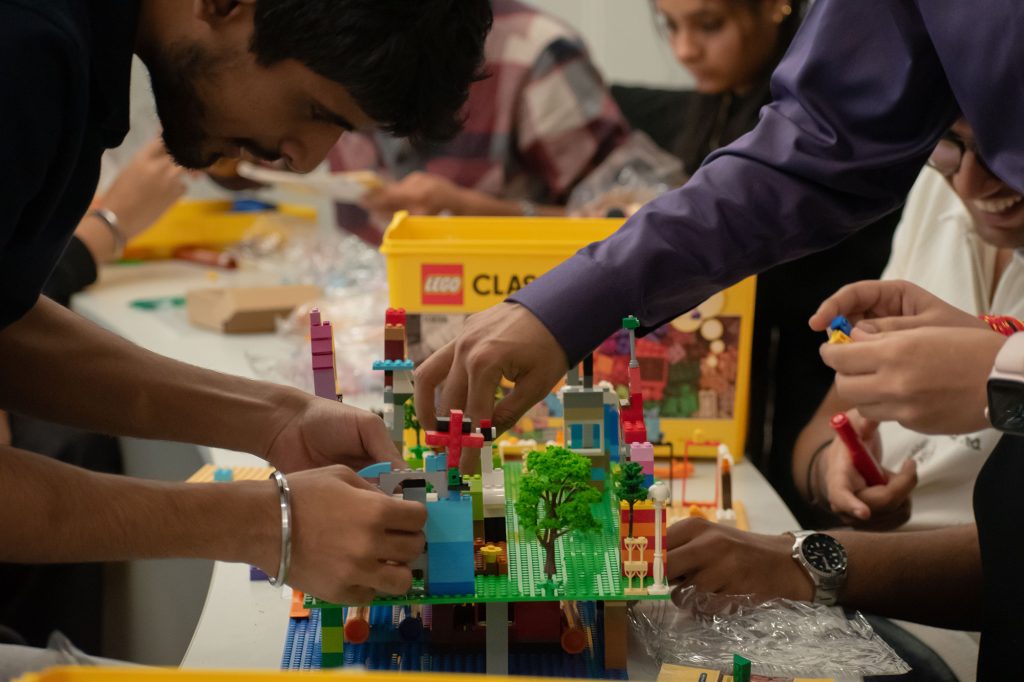
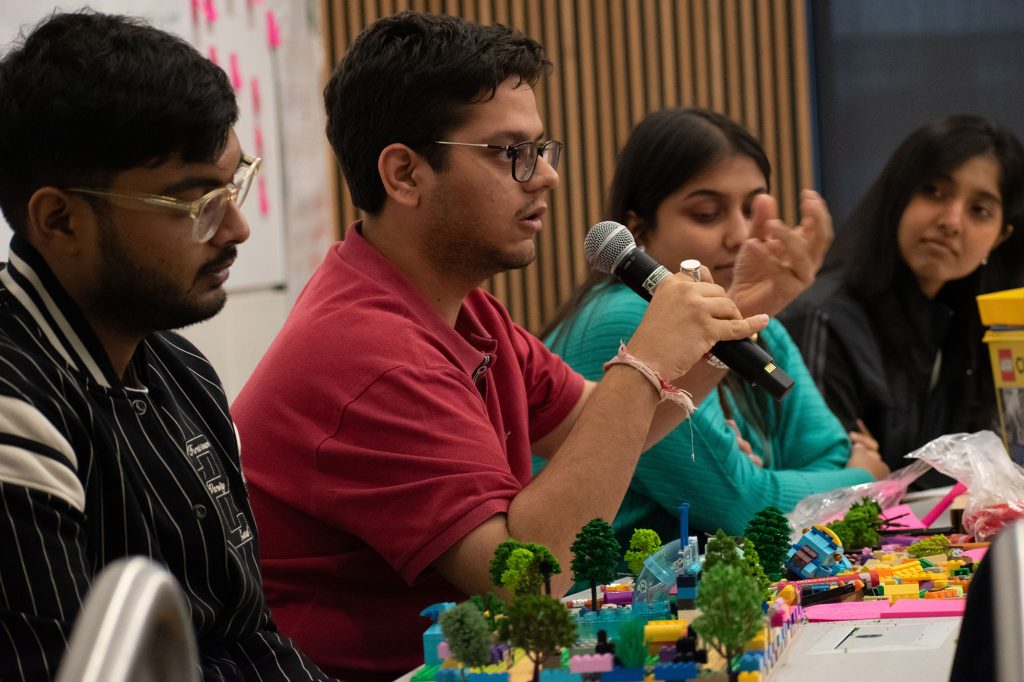
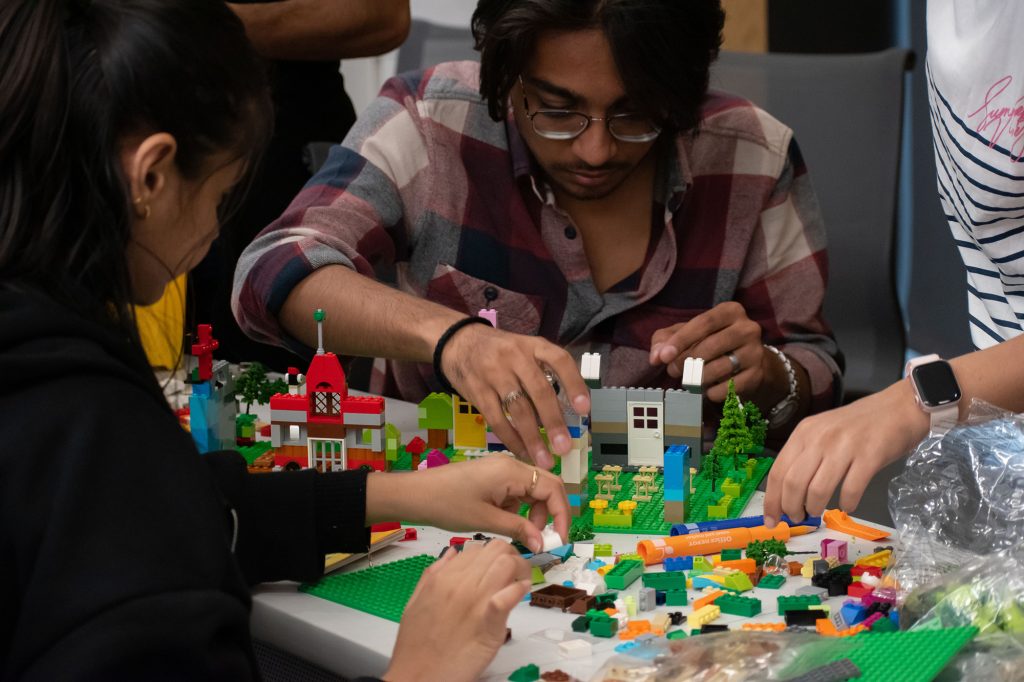
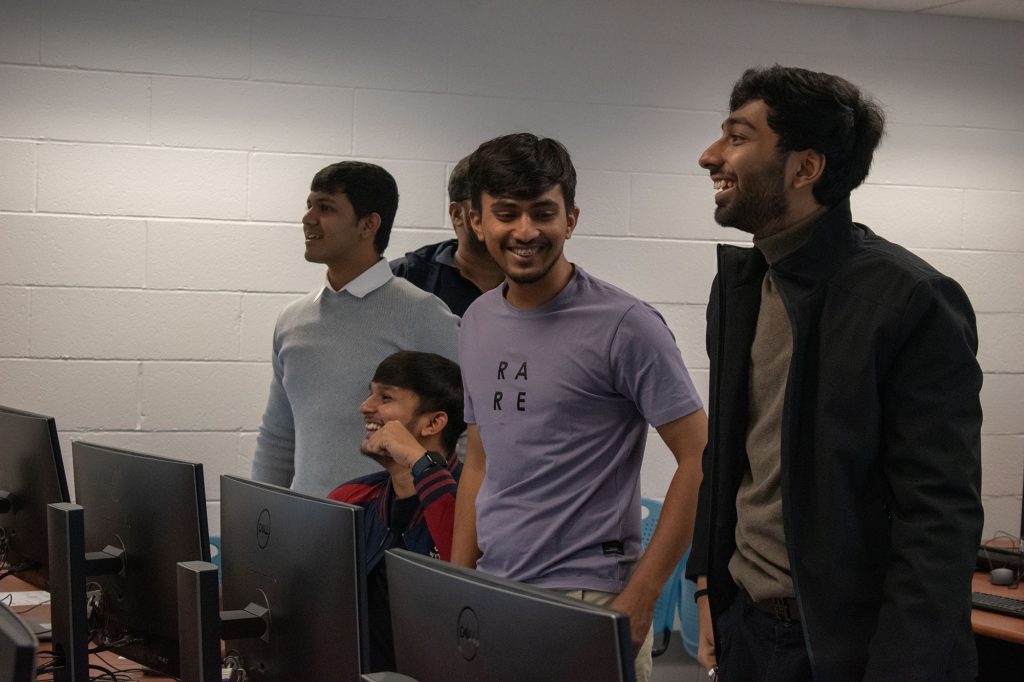
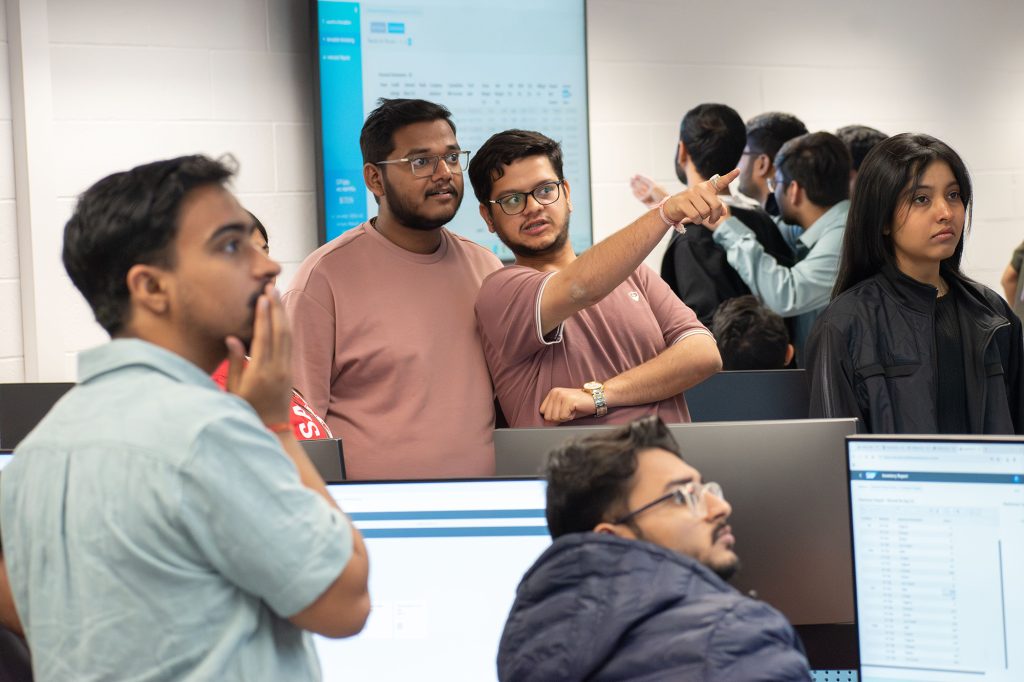
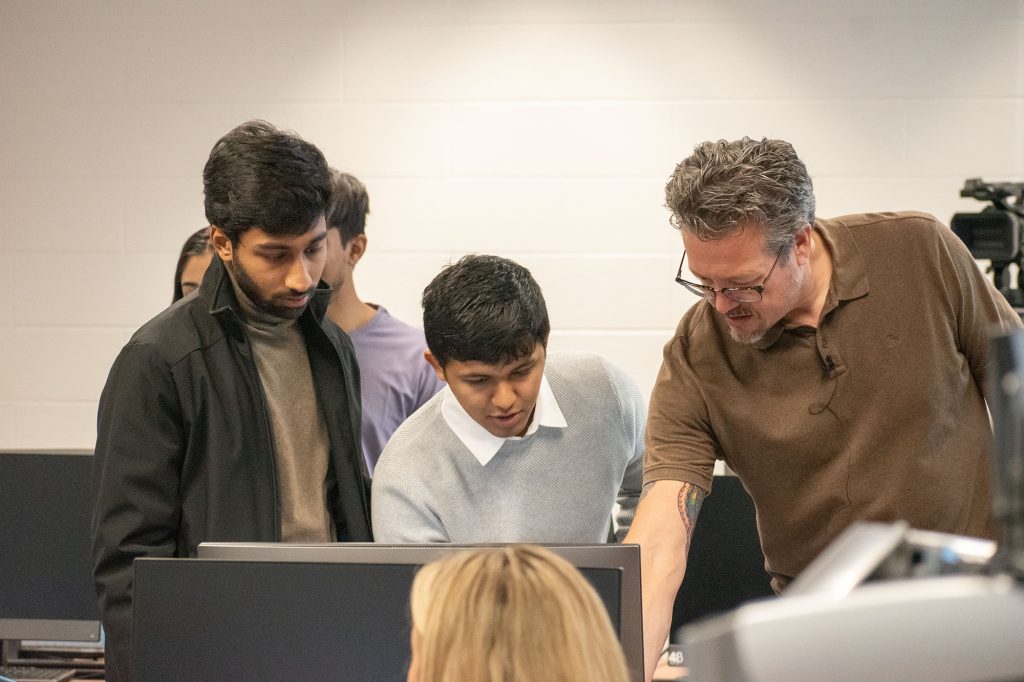
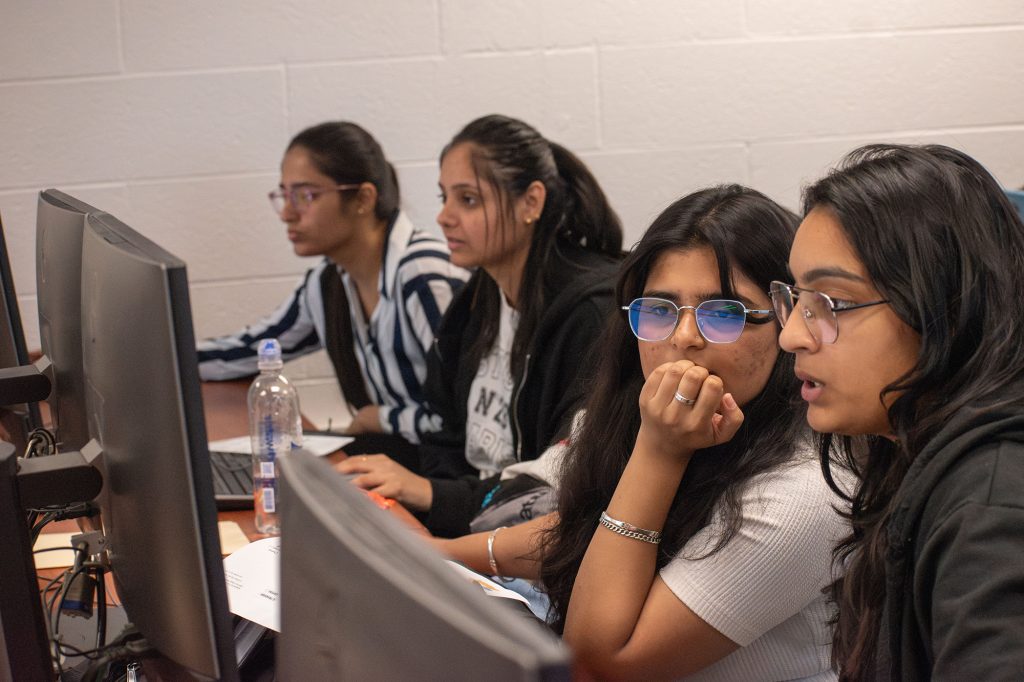
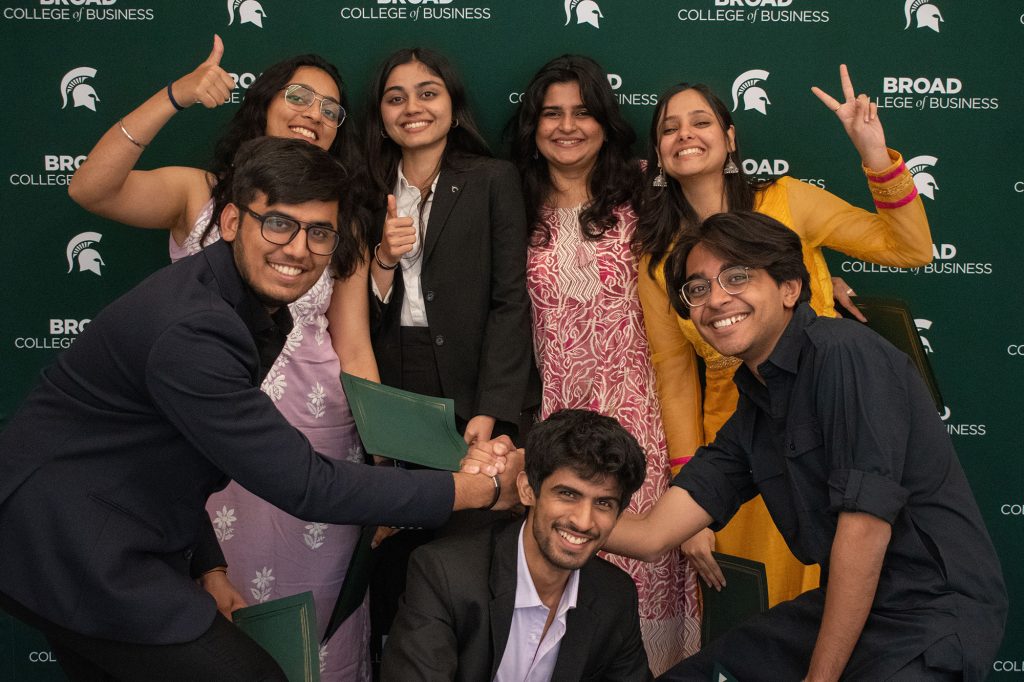
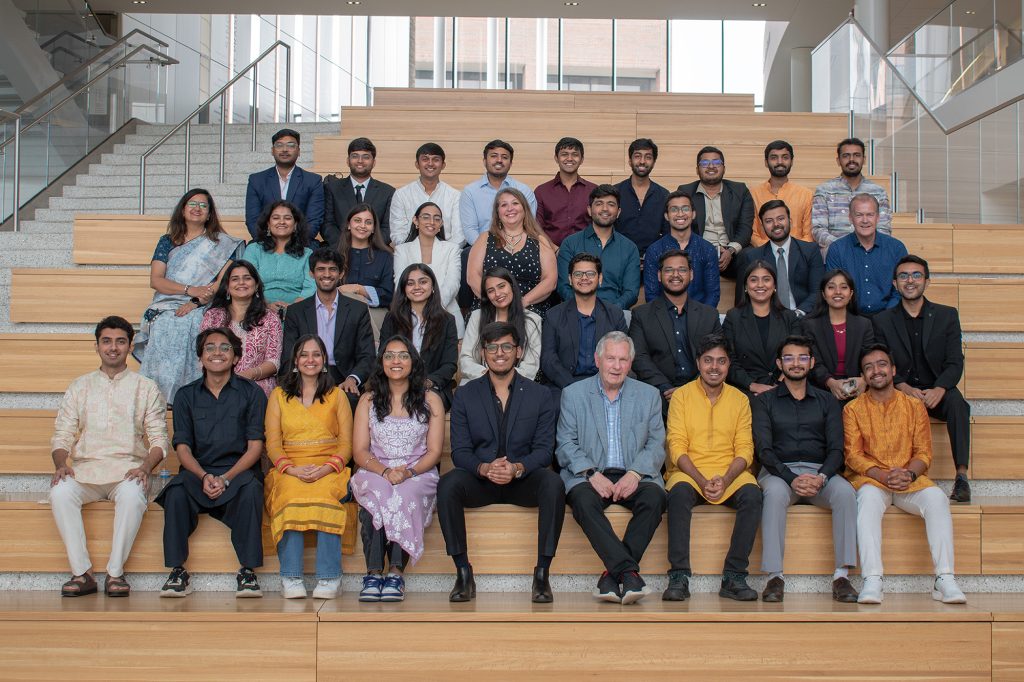
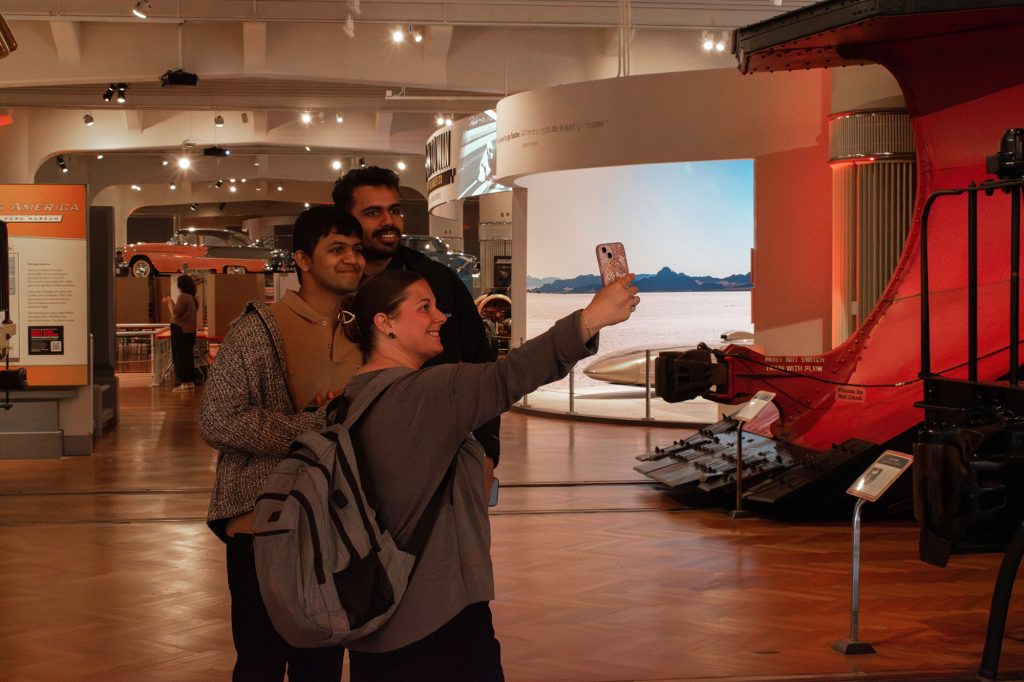
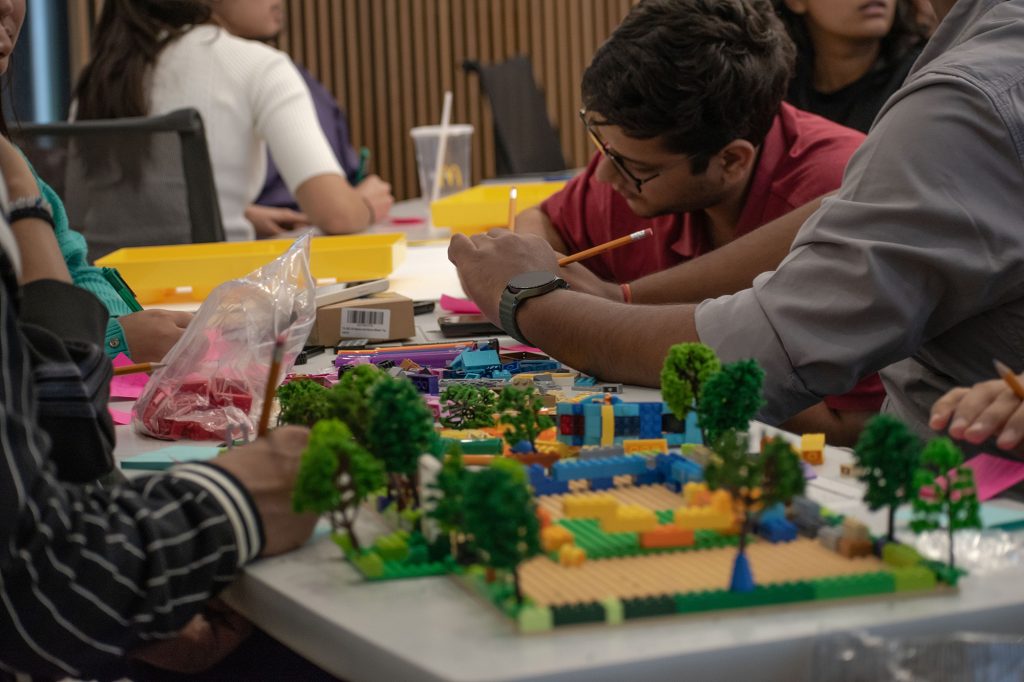
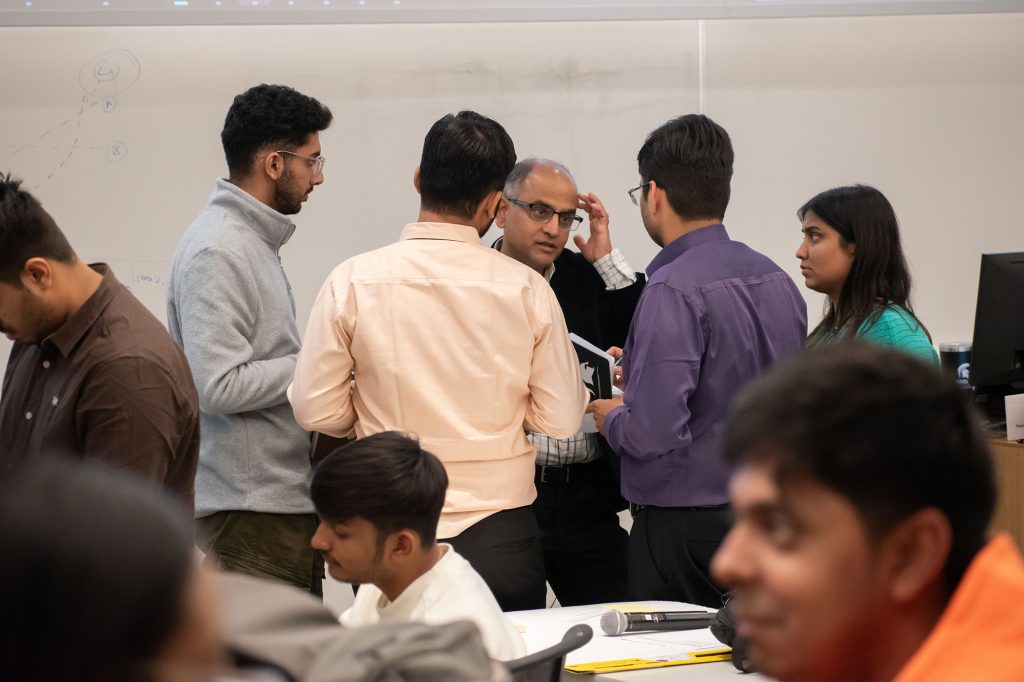
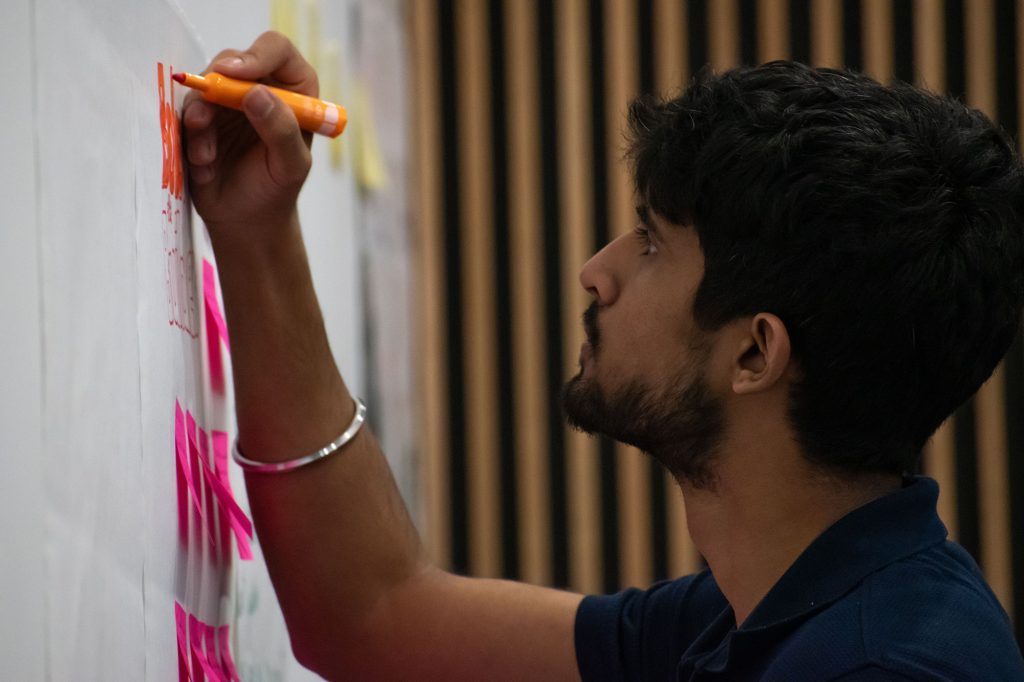
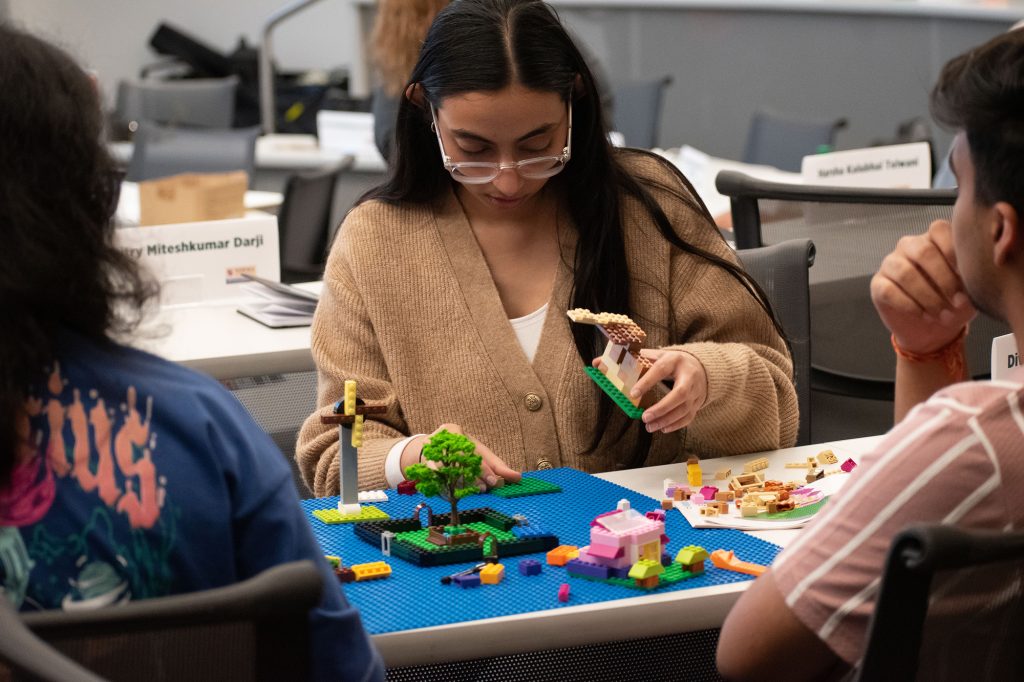
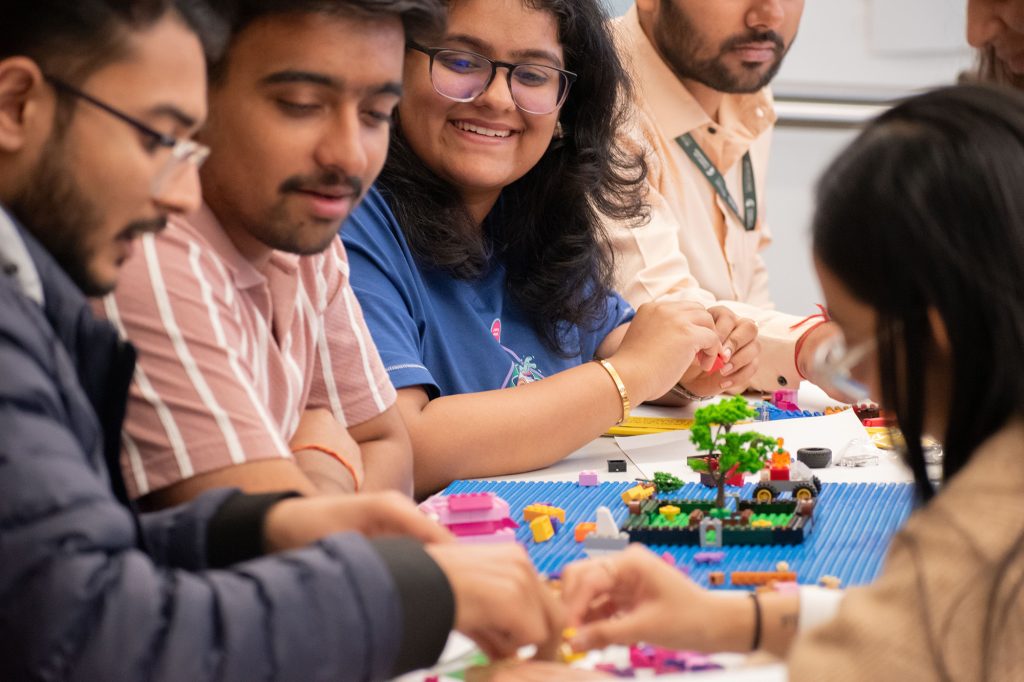
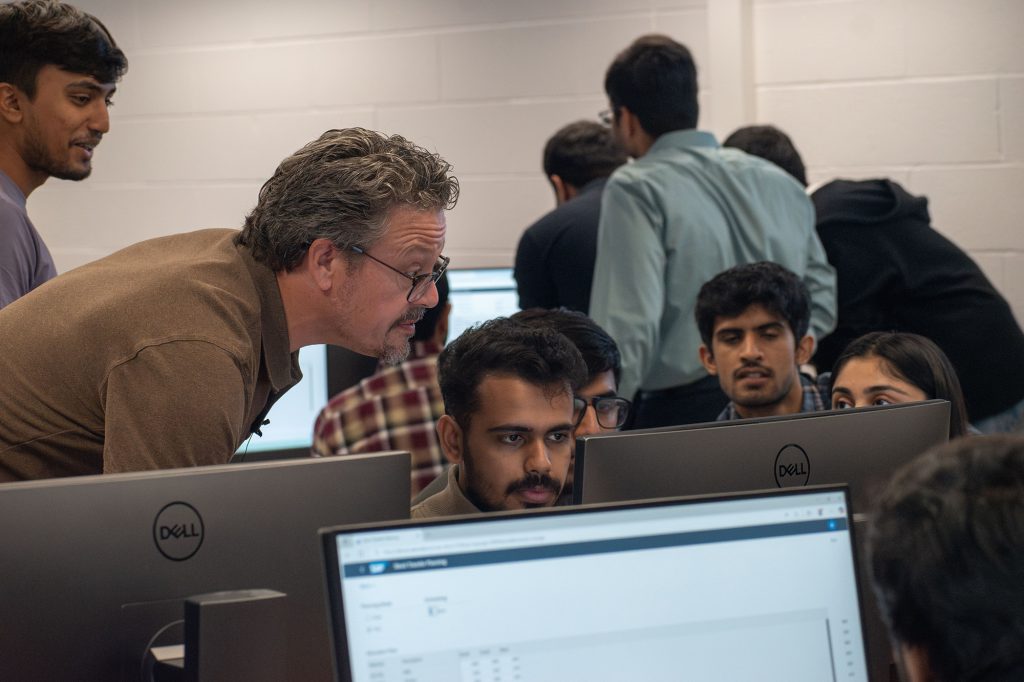
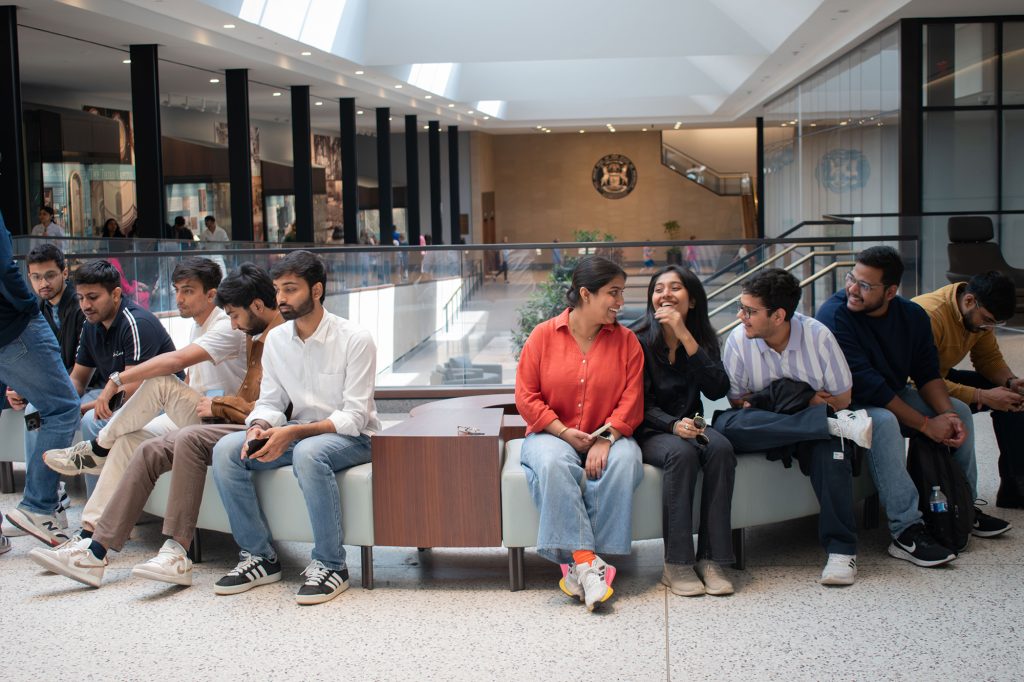
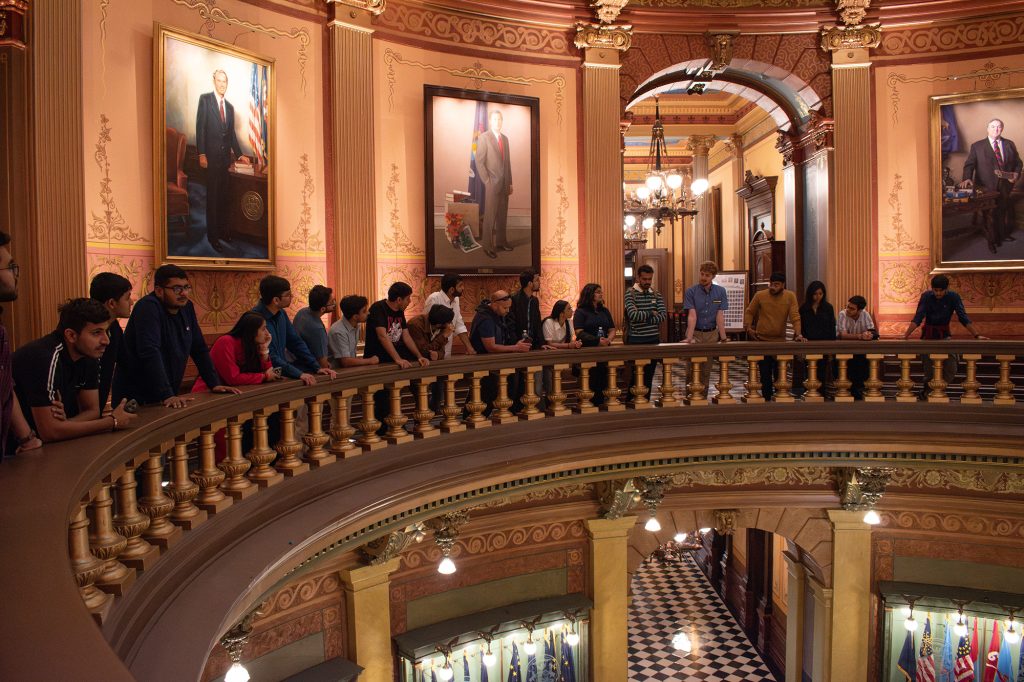
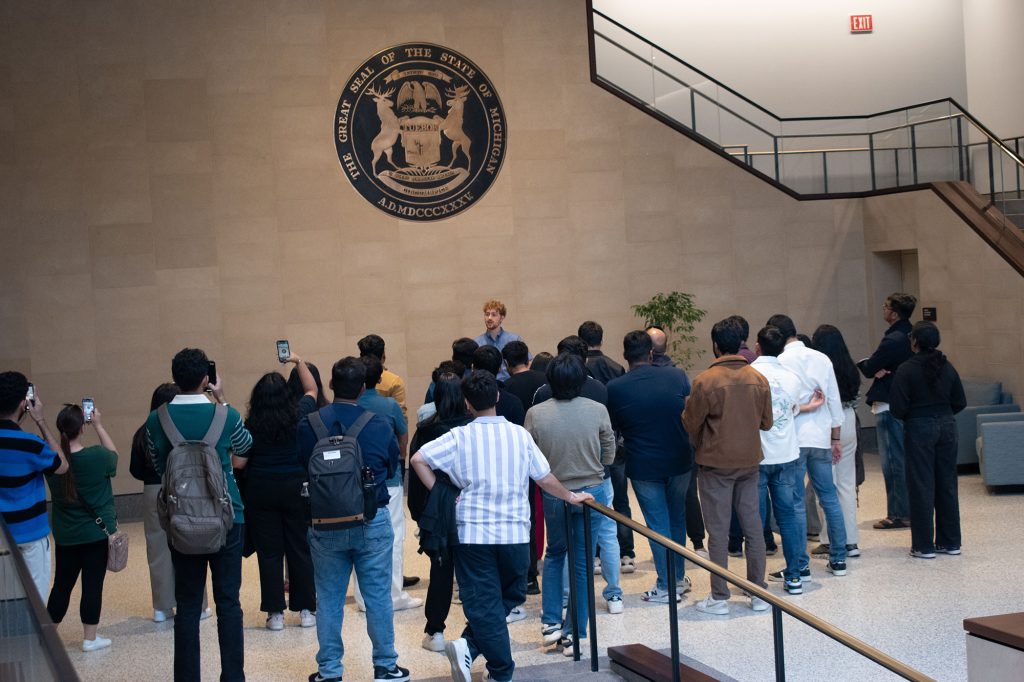
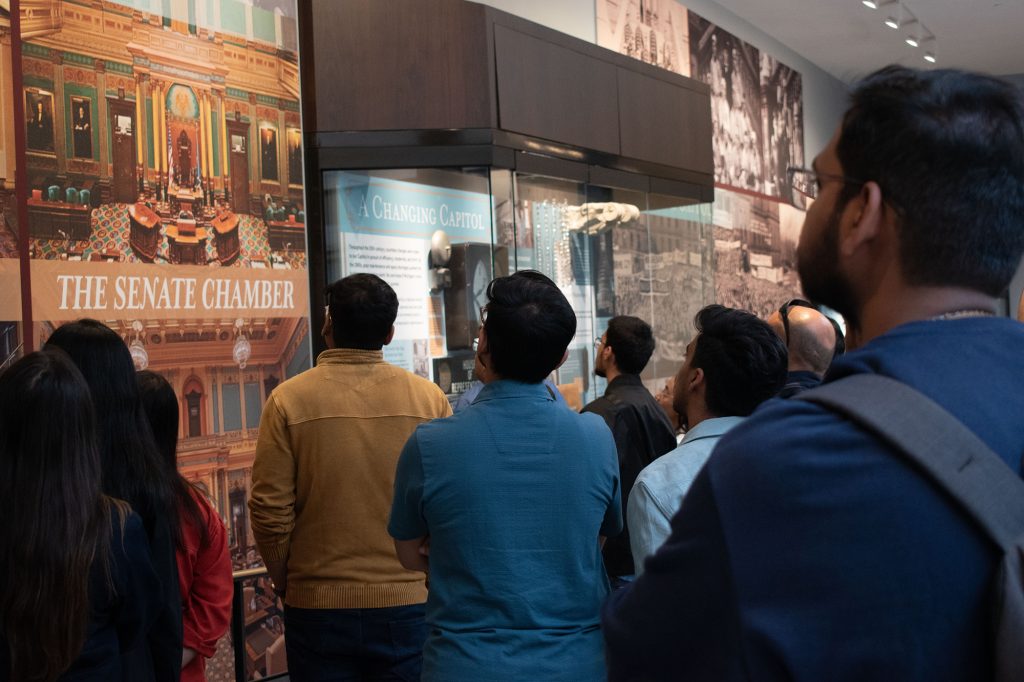
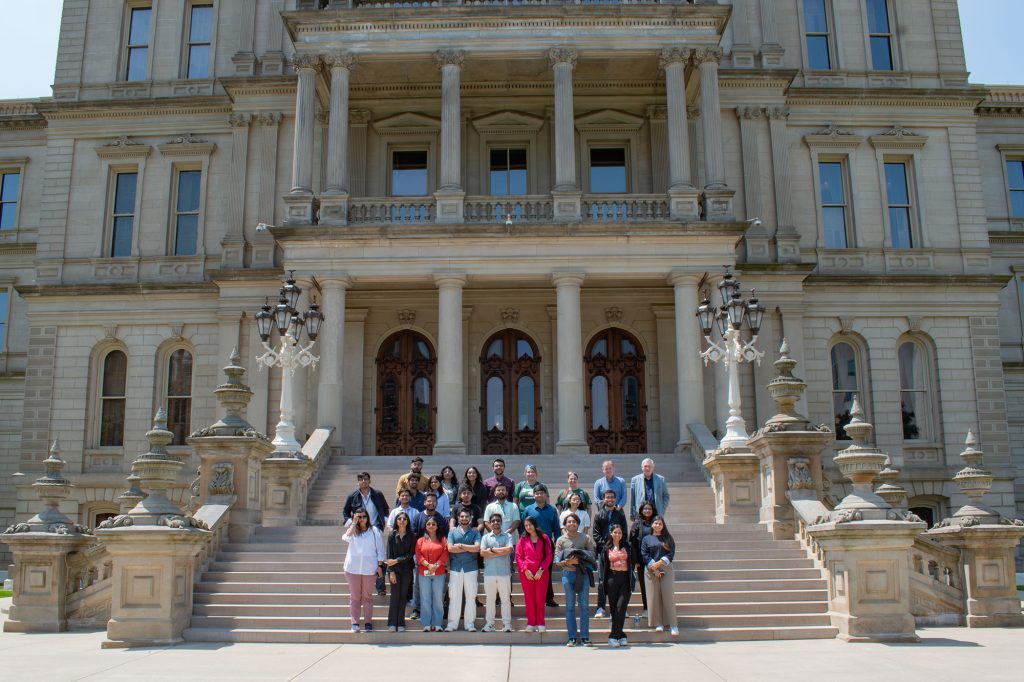
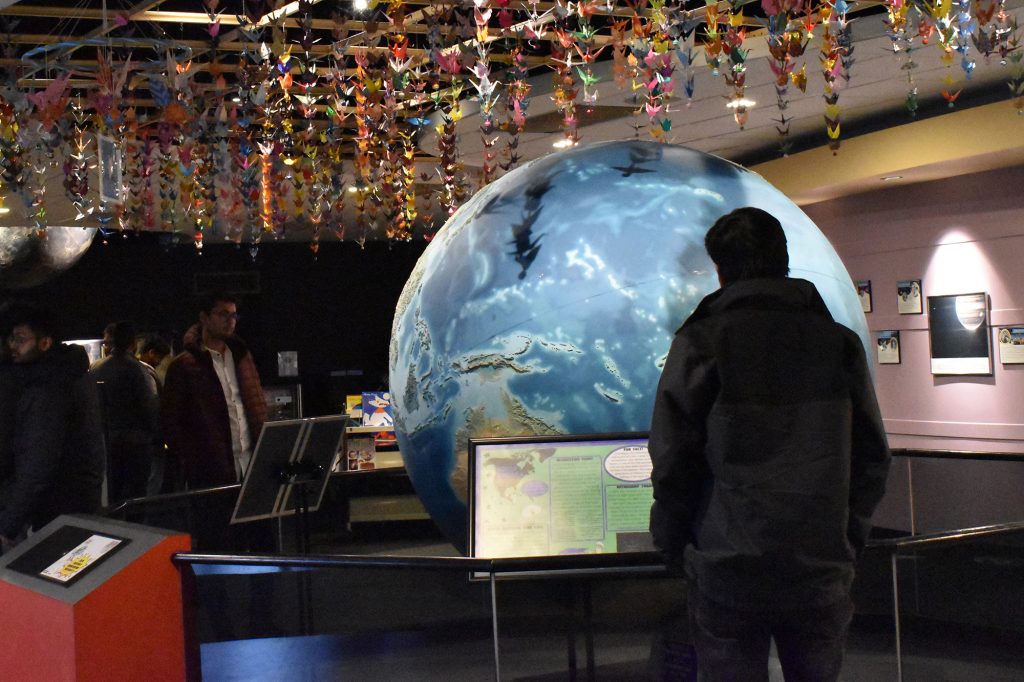
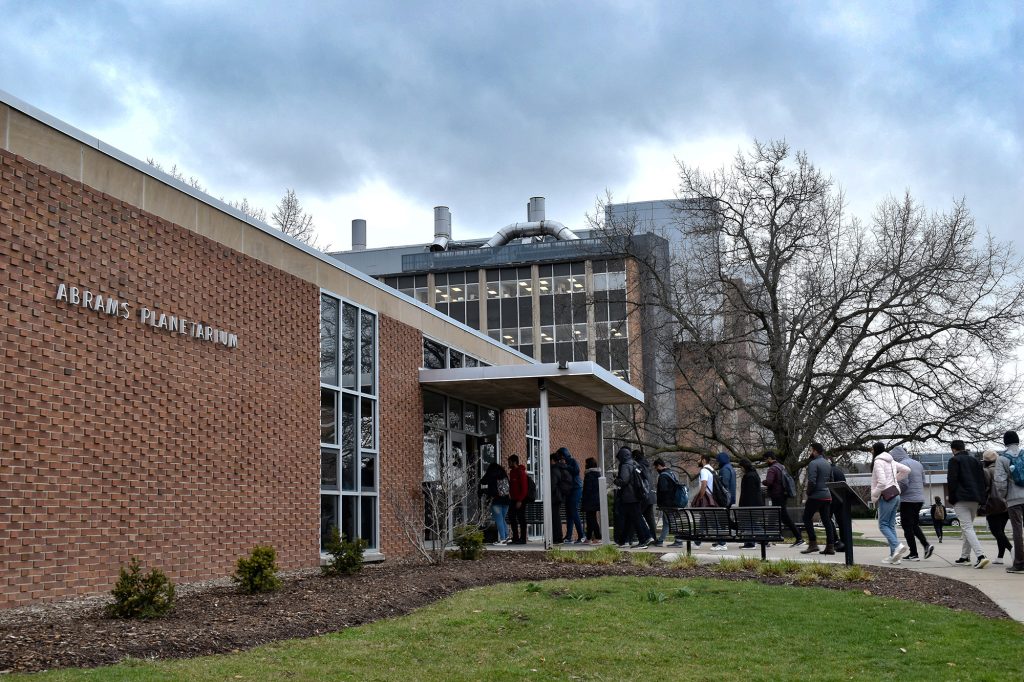
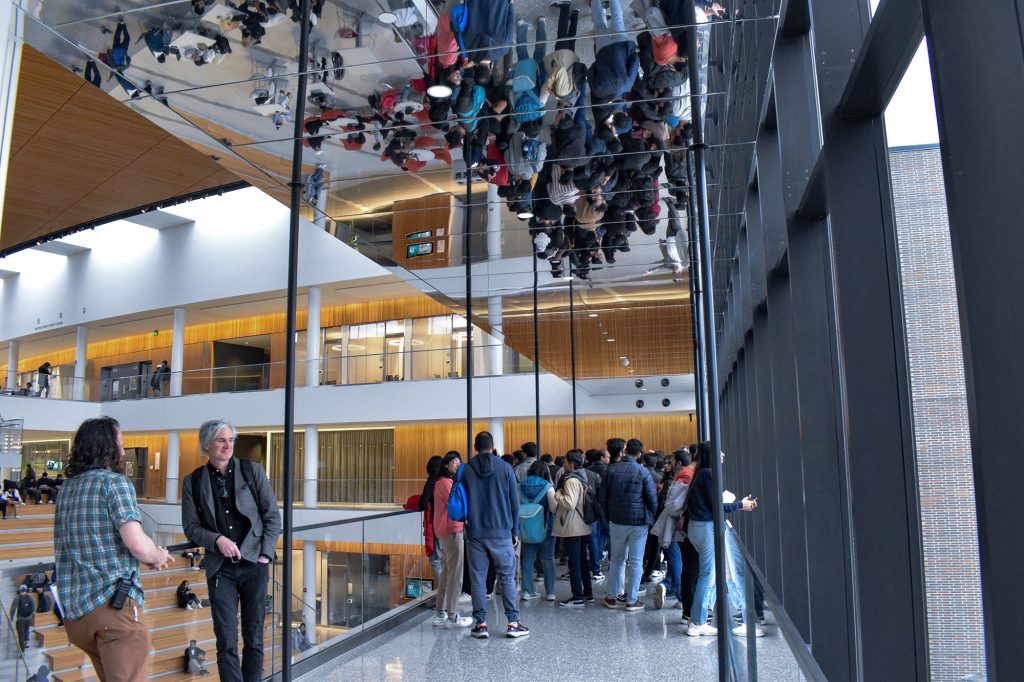
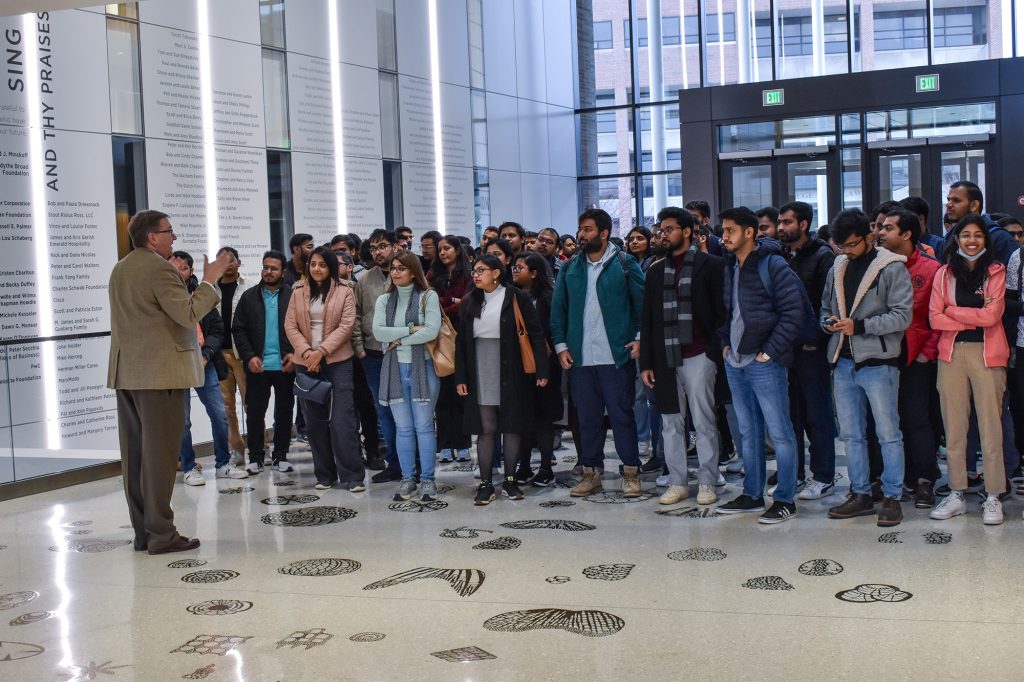
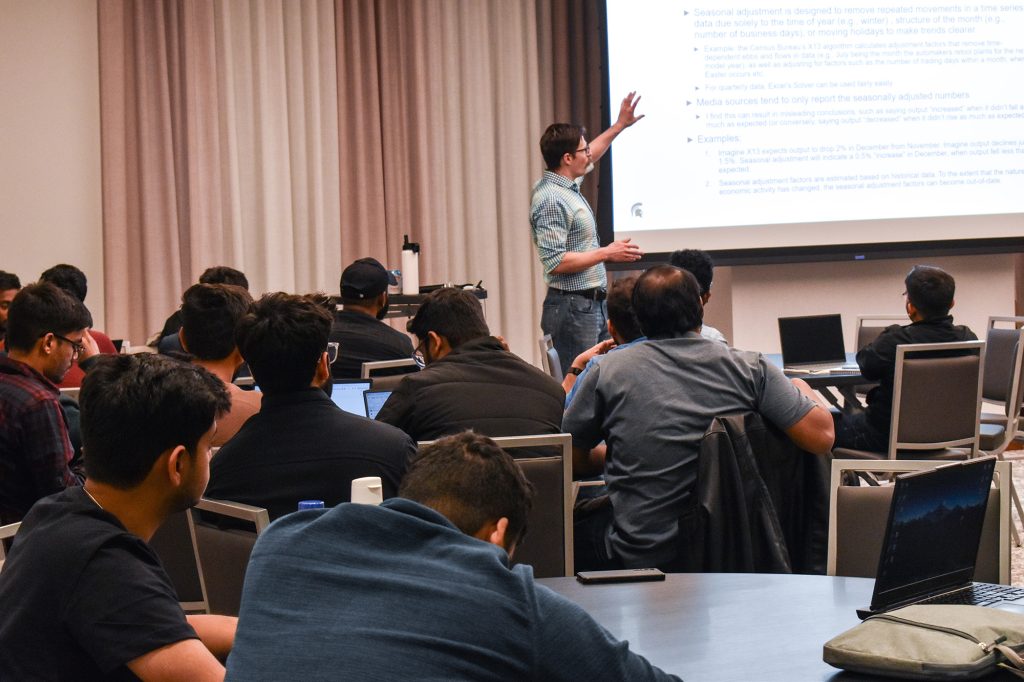
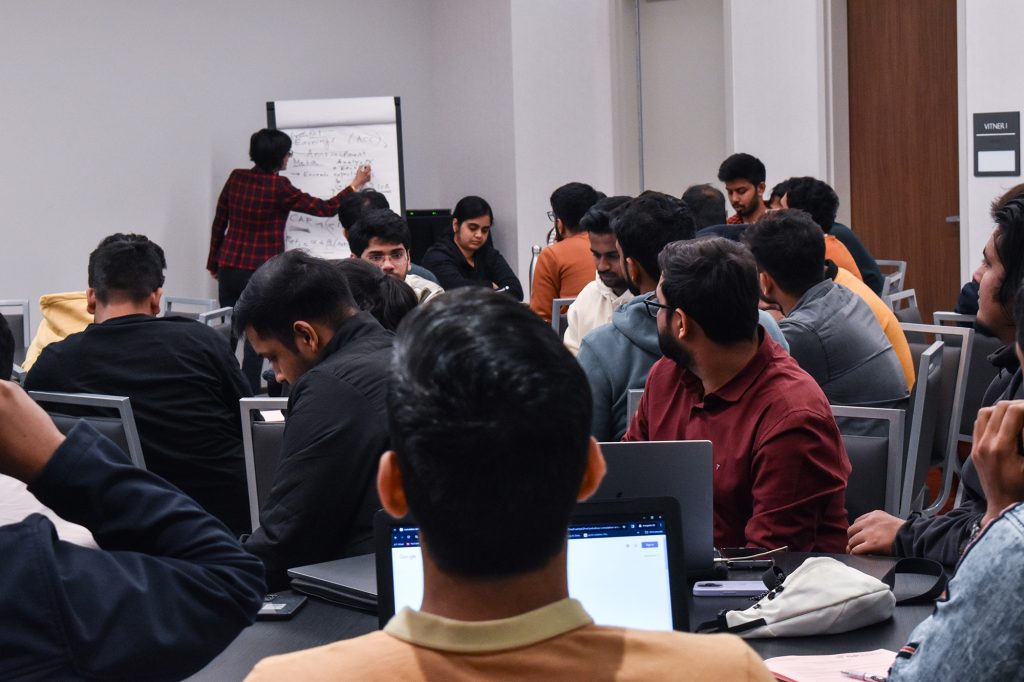
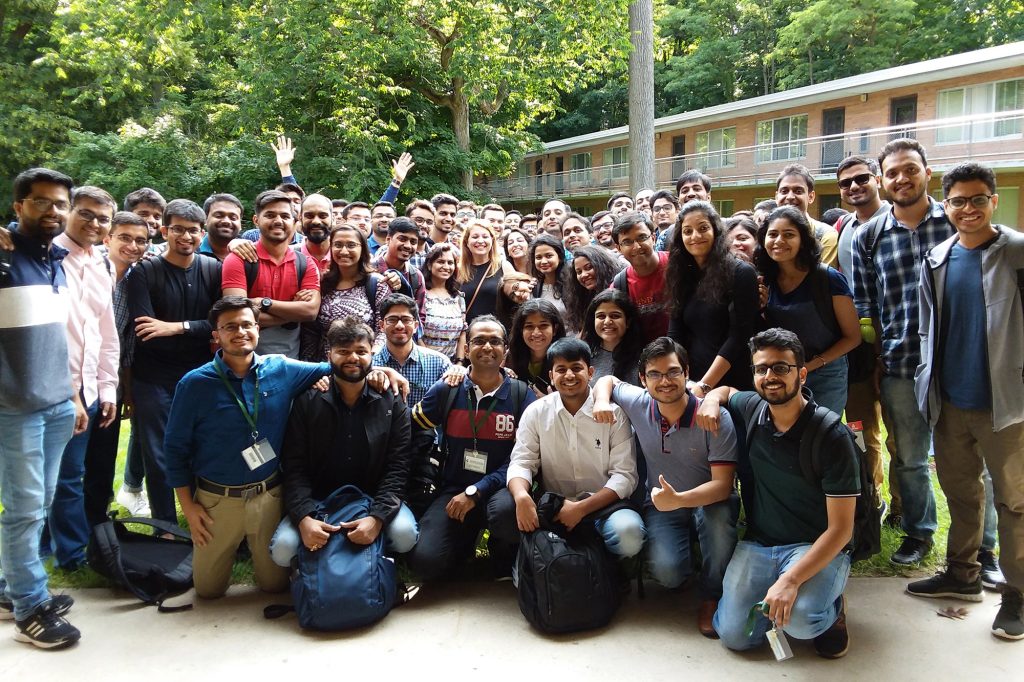
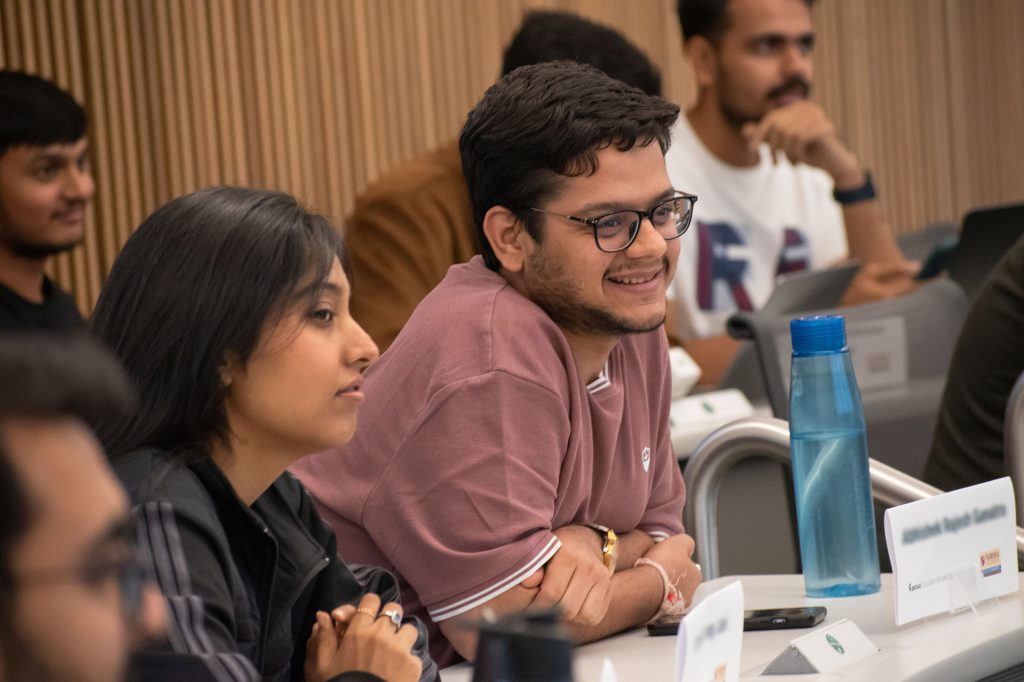
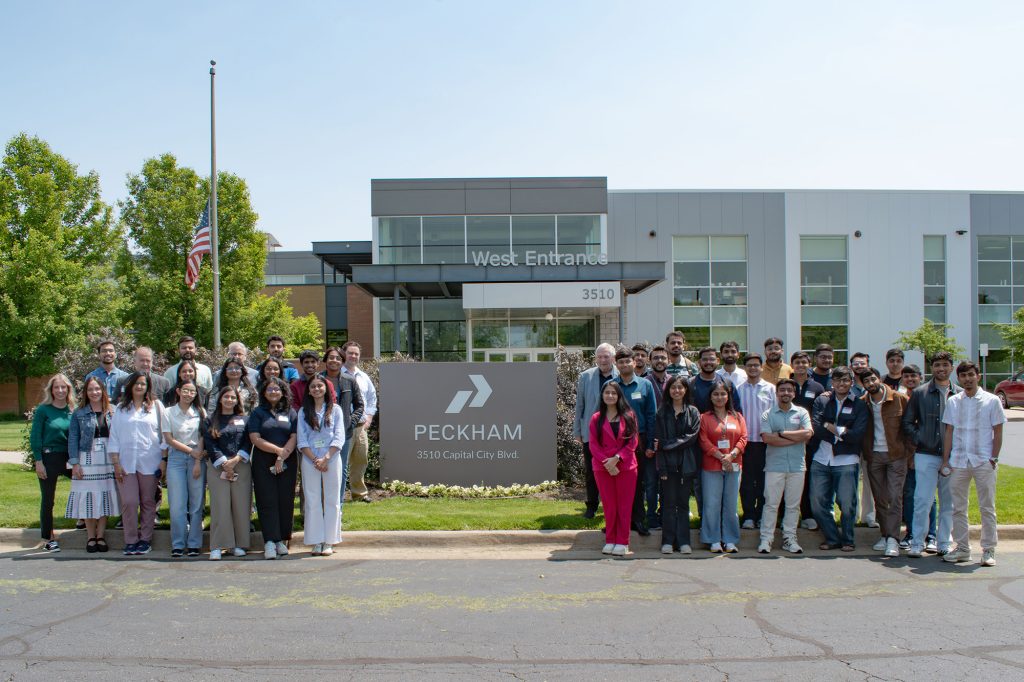
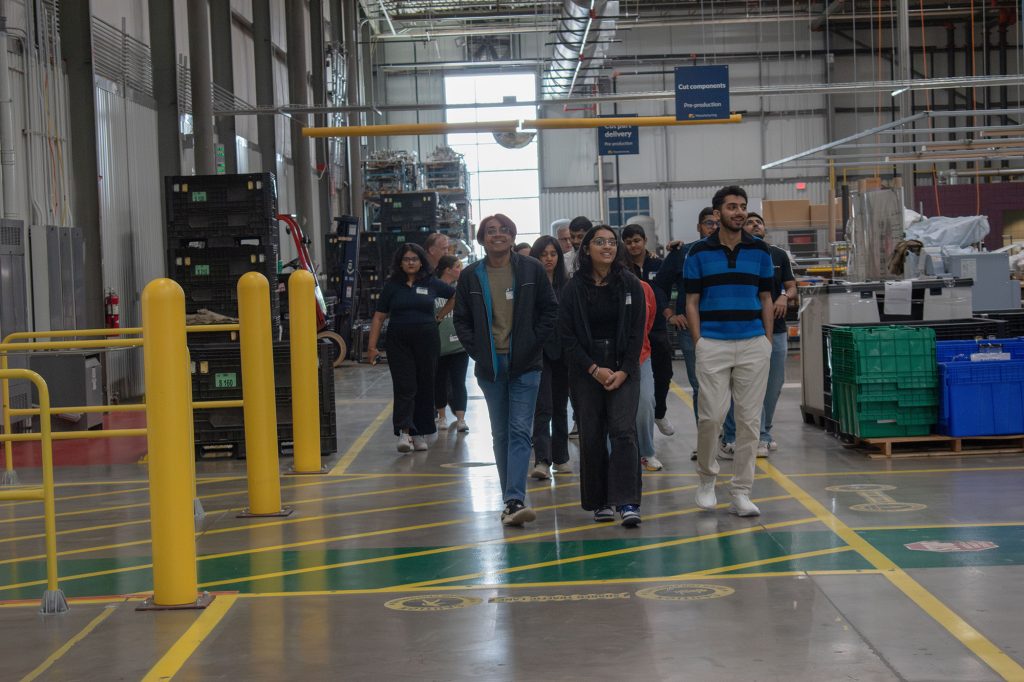
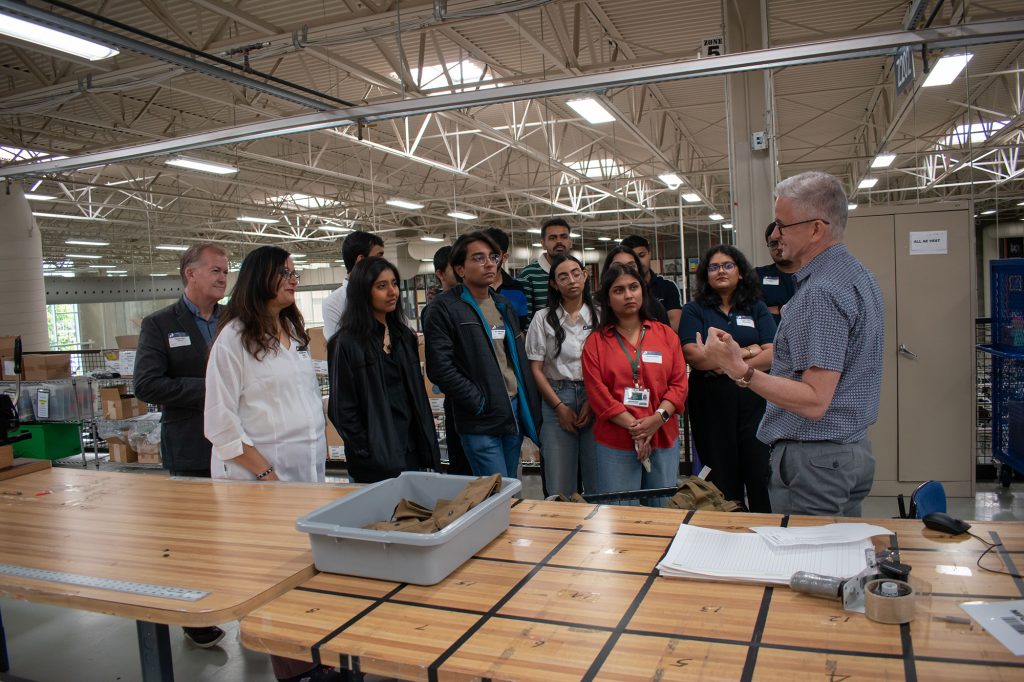
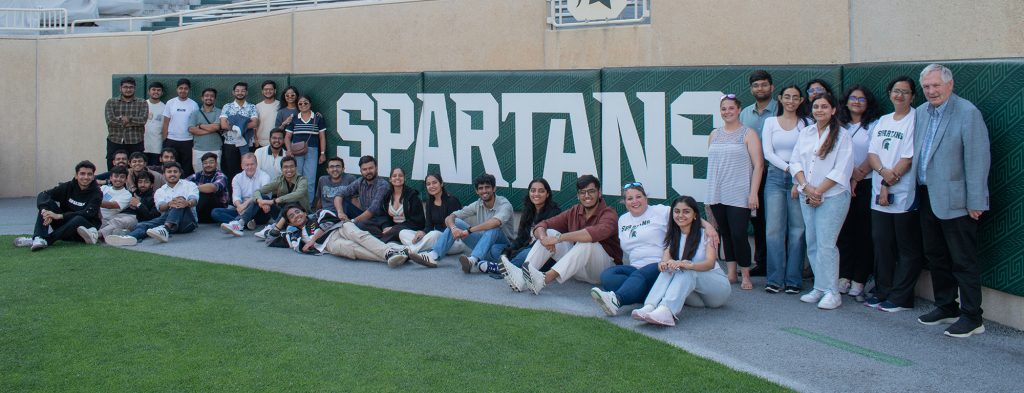
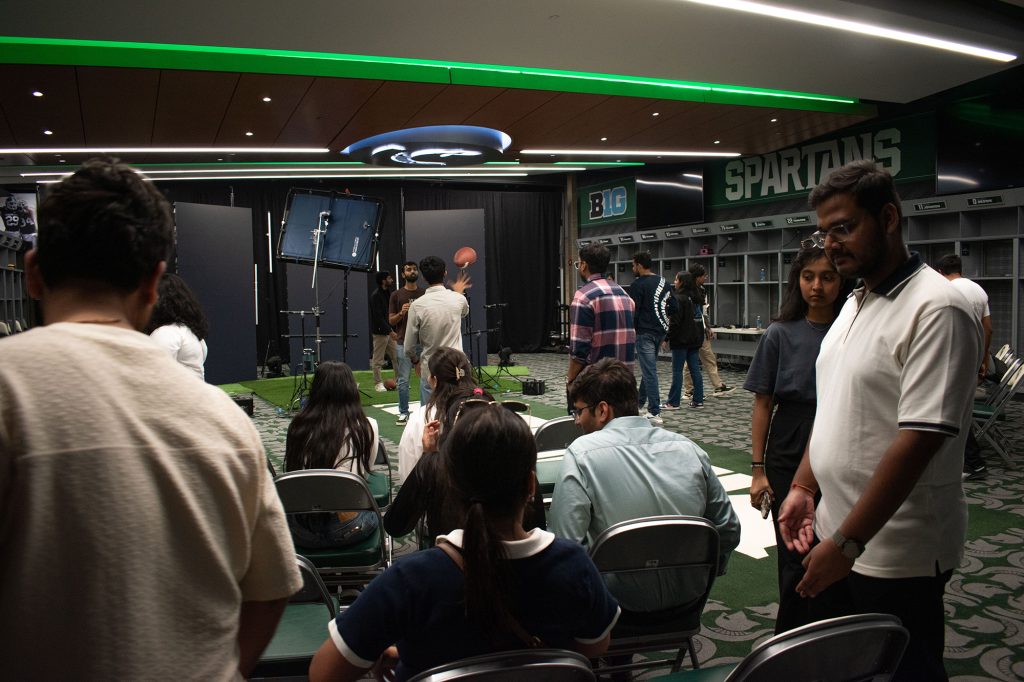


For over a decade the Broad College of Business has welcomed master’s students from international partner universities for immersion programs. Students spend up to three weeks immersed in study and discovery. They work with industry-leading faculty from MSU, in disciplines such as supply chain management, business analytics, marketing, information technology, and finance, conducting project work, and visiting major corporate and innovator sites.
Many international graduate programs place great importance, and require, that students undertake an international experience that broadens their understanding and comfort in international business. The Broad College of Business study immersions are designed to satisfy the academic, industry, and cultural requirements of their international experiences. Key components of these immersions include:
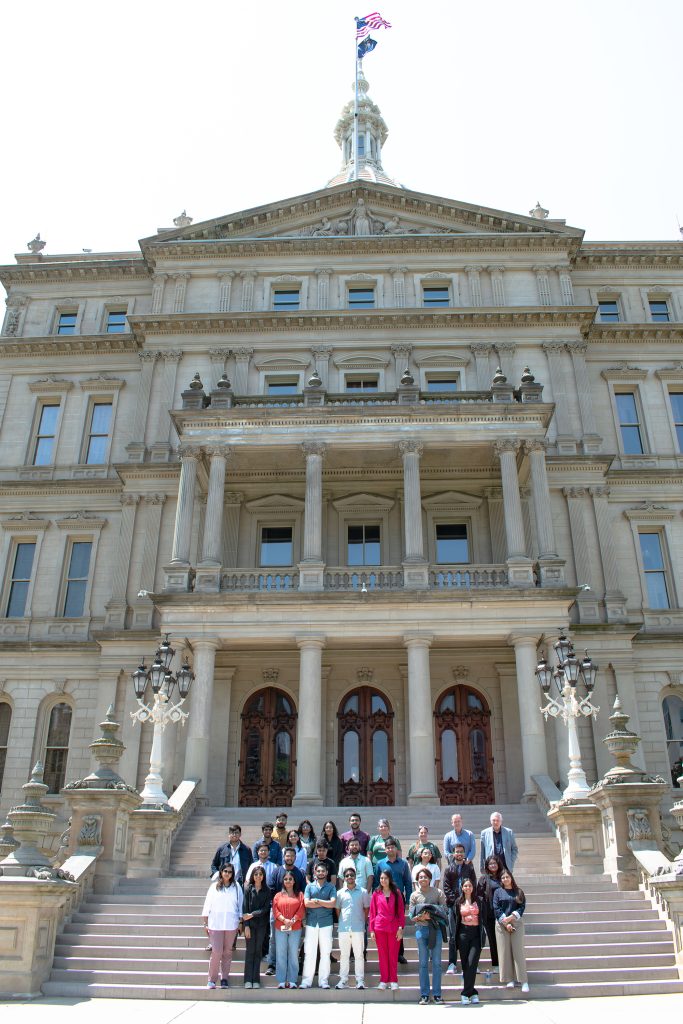
Michigan offers international students a rare environment where high-value economic scale intersects directly with rapid industrial transformation. With nominal economic output ($730B – $750B) matching nations like Ireland and outpacing countries like Sweden, Singapore, Portugal and the Philippines, Michigan gives visiting graduate students immediate access to an ecosystem commanding over $100B in manufacturing and $60B – $84B in engineering and technical services. Rather than viewing isolated business cases in a classroom, students engage directly with corporate headquarters and supply chains operating on an international scale.
The state’s true value for experiential learning lies in its concentrated tech leadership. Michigan leads in terms of North American automotive R&D investment, serving as a living laboratory for EV battery platforms, autonomous test facilities, and industrial robotics.
Coupled with cutting-edge health-tech corridors and advanced AgTech supply chains, a short study tour exposes students to high-stakes strategic decisions and operational technology deployment they cannot experience in smaller or strictly service-based economies.
Michigan’s primary economic drivers combine large-scale industrial output with engineering, research, and technical services.
1. Manufacturing (~$100B Output)
2. Professional, Scientific, & Technical Services (~$60B–$84B Output)
3. Healthcare & Life Sciences (~$50B–$55B Output)
4. Advanced Agriculture & AgTech (~$5.7B Farm Output; ~$100B Broader Food System)
 Dr. Sriram Narayanan is the Kesseler Family Endowed Faculty Fellow in Supply Chain Management at the Eli Broad College of Business, Michigan State University. He holds a Ph.D. from the University of North Carolina at Chapel Hill and an MBA and B.E. from the University of Delhi, India. His research explores supply chain management, product-service innovation, sustainability, and inclusion in emerging markets. Dr. Narayanan serves as Co- Department Editor for JOM, Senior Editor for POM, and Associate Editor for Management Science and Decision Sciences. A recipient of the Withrow Emerging Research Scholar Award and Community Engaged Partnership Award, he also holds leadership roles in the Production and Operations Management Society and the Decision Sciences Institute.

Dr. Anjana Susarla is the Omura-Saxena Professor of Responsible AI at the Eli Broad College of Business, Michigan State University. She holds a Ph.D. in Information Systems from the University of Texas at Austin, an MBA from IIM Calcutta, and a B.E. from IIT Chennai. Her research explores the economics of AI, information systems, and social media analytics, with work in top journals such as Management Science, MIS Quarterly, and Information Systems Research. Recognized among the Top 100 IS Researchers, Dr. Susarla has received major awards for research, teaching, and leadership in Responsible AI. She frequently speaks and comments on AI ethics, algorithmic bias, and digital transformation in outlets like BBC, Bloomberg, and The Washington Post.
 Dr. Forrest V. Morgeson III is an Associate Professor of Marketing and Co-Director of the Doctoral Program at the Eli Broad College of Business, Michigan State University. His research focuses on customer satisfaction, customer experience management, and the marketing-finance interface, with work published in leading journals such as the Journal of Marketing, Journal of Marketing Research, Marketing Science, and Harvard Business Review. Formerly the Director of Research at the American Customer Satisfaction Index (ACSI), he has also authored two books on customer satisfaction and performance. A global consultant and speaker, Dr. Morgeson has presented in over 50 countries and has been featured in major media outlets including The Wall Street Journal, CNN, and Forbes.
The cost of the program, paid for by the student, is based on a calculation of the fixed costs per student, such as accommodation, and the variable costs such as faculty teaching, which has a lower average cost with more participants. Students should estimate a minimum of USD3,800 for the Program Fees which includes the items below, plus Excluded Costs items that are not included in the Program Fees.
slideshow has a previous and next buttons