

Business Centered, Healthcare Specific
Overview
Michigan State University’s Master of Science in Healthcare Management provides healthcare professionals with the vital skills needed for optimal business performance in the complex healthcare landscape. The interdisciplinary curriculum focuses on collaboration, evidence-based decision making, and strategic thinking.
Academic Calendar
Fall 2026
Application Deadline
August 1, 2026
Start Date
August 31, 2026
A Business-Based Approach to Healthcare Management, 100% Online
The M.S. in Healthcare Management is offered in five-week modules with 24/7 access to an interactive learning environment. No campus visits are required, meaning you can pursue your degree from our internationally recognized research university while maintaining your professional commitments. Everything you learn here can be immediately applied into the work within your organization.
- 100% online
- Approximately 21 months
- 34 credits
- Collaborative learning environment led by MSU’s renowned faculty and healthcare industry experts

The Broad College of Business has been accredited by the Association to Advance Collegiate Schools of Business (AACSB) since 1953.
Required Courses
- HCM 801 Critical Thinking and Innovation in Healthcare
HCM 801
Learn strategies for dealing with cognitive biases, making unrecognized assumptions, determining causality, navigating pathways in critical reasoning and maximizing reasoning effectiveness. Apply innovation principles for developing and implementing innovative designs, processes and leadership in healthcare.
- HCM 802 Cost Analysis in Healthcare
HCM 802
Topics include A) cost analysis: cost estimation, cost allocation and cost behavior; B) pricing: revenue management and strategic product-mix decisions; C) profitability: analytical techniques for determining profitability of departments, services and patients; D) control: budgeting, variance analysis, coordination of activities among departments; E) contracting with suppliers and insurance companies.
- HCM 804 Financial Management in Healthcare
HCM 804
Learn financial management tools for investment and financing decision-making in healthcare firms. Explore risk, valuation and capital budgeting. Understand how to analyze the financial condition of the firm through the examination of financial statements.
- HCM 805 Quality, Risk, and Performance Management
HCM 805
Explore how to manage healthcare performance by means of quality initiatives, process management and risk management. The course will focus on relevant methods, principles, processes, strategies and systems thinking.
- HCM 806 Healthcare Information Systems
HCM 806
Review issues in the management and implementation of healthcare information systems and application of information technologies to support the effective and efficient delivery of healthcare work processes to stakeholders. Explore the relationship between quality management and information management. Learn about technology standards, security, emerging technologies and healthcare analytics.
- HCM 807 Law and Ethics in Healthcare
HCM 807
Understand the legal and ethical doctrines, principles, applications and issues in healthcare organizations. Explore the legal and ethical dimensions of decision making, administrative law and planning in healthcare.
- HCM 808 Healthcare Systems and Economic Policy
HCM 808
Understand the organization of U.S. health system, policy process and services. Review the dynamics of economic theory, valuation, financing and delivery of healthcare.
- HCM 809 Organizational Behavior in Healthcare
HCM 809
Discover the role of workforce leadership in fulfilling the goals and mission of healthcare organizations. Learn about the theories and applications of organizational behavior principles to motivating, rewarding, and structuring employees’ work; managing groups and teams; and structuring the organization.
- HCM 810 Human Resource Management in Healthcare
HCM 810
Discover the role of human resource management for healthcare organizations. This course focuses on strategies for human resource recruitment, utilization, productivity, compensation and development.
- HCM 811 Healthcare Strategic Management
HCM 811
This course examines ways top managers create and sustain competitive advantage in today’s challenging healthcare marketplace from a total firm perspective.
- HCM 812 Supply Chain Management in Healthcare
HCM 812
Review the concepts and tools of supply chain management related to healthcare settings. Topics include management of resources, sourcing, operations, inventory, logistics and capacity for effective services, quality and cost performance.
- HCM 813 Healthcare Services Marketing
HCM 813
Explore the principles and processes of marketing and its role in effectively managing healthcare services for improvement and policy making.
- HCM 814 Hospitality and the Patient Experience
HCM 814
Discover the patient experience in healthcare as it relates to hospitality marketing, service quality management, patient well-being and the role that leadership plays in the process.
- HCM 815 Managerial Epidemiology and Population Health
HCM 815
Review the epidemiological concepts for decision-making in healthcare organizations. Assess managerial strategies for applying population health principles to disease assessment, community forecasting, cost effectiveness and utilization of services.
- HCM 825 Analytics in Healthcare
HCM 825
The availability of large-scale healthcare data through electronic medical records (EMR), patient portals, social media and mobile healthcare apps offers tremendous opportunity to examine the role of analytics in transforming the business practice of healthcare. This includes a better assessment of cost effectiveness, learning curves in the practice of medicine, and identifying best practices for evidence-based medicine. Analytics in Healthcare will offer an overview of the concepts and methods of business analytics as it relates to healthcare management.
Capstone Course
- HCM 816 Healthcare Management Capstone
HCM 816
The capstone class integrates the coursework, skills and perspectives in the program in a project, paper or practicum. The capstone is intended to bring cumulative knowledge to culmination on specific healthcare management issues, dilemmas and gaps. Each capstone project, paper or practicum must be approved in writing and overseen by a faculty member.
Total Courses
Required Courses
30 Credits
Electives
4 credits
Total
34 credits
Tuition
Cost Per Credit Hour
$1,000
Total Credits Needed
34 credits
Tuition is determined by the University and does not include books or other fees that may apply. These rates are subject to change at any time during the program or enrollment process.
Need help?
Let us know if you have any questions or need assistance.
Toll Free: 855-300-1310
International: +1 813-612-4295
Take the next step in your career with our program guide!
"*" indicates required fields
Admission Requirements
To be considered for MSU’s Master of Science in Healthcare Management, ideal candidates should:
- Be currently employed full-time or have been employed in the healthcare industry (including hospitals, pharmaceuticals, physician associations, surgical centers, medical suppliers, assisted care facilities, device manufacturers, insurance, consulting, or public policy) or at least 3 years of full-time experience in any industry.
- Have a 4-year bachelor’s degree from a regionally or nationally accredited institution.
- Have a cumulative undergraduate grade-point average of 3.00 in the last two years of your program.
- Have a high degree of potential for advancement to an organizational leadership role.
- Have some background knowledge of and exposure to word processing, spreadsheets, and presentations.
- International Applicants click here for more information.
Admission to the program is selective and meeting the minimum standards listed does not guarantee admission. The applicant’s overall record is considered, including the student’s statement of objectives, recommendations, academic transcripts, and other documentation as required.
Applicants must submit the following items:
- $75 non-refundable application submission and transcript fee
- All required application documents
- Transcripts
- Transcripts from Michigan State University are not required. The official undergraduate transcript is required and must include a conferral date from the regional or nationally accredited institution.
- Three letters of recommendations from a professional environment.
- A statement of purpose that describes relevant education, relevant work experience and describes how the applicant intends to apply the degree to his or her career and how this degree will help them achieve their career goals. The statement should be between 250 – 1,000 words.
- Resume (with detailed work experience)
Transfer Credit Policy
- As a rule, the Program does not accept transfer credits and will only review and consider a request to transfer credits in rare and exceptional circumstances.
Who You'll Learn From
A diverse network of professionals driven to positively impact the management side of the healthcare industry.
The MS-HCM program emphasizes the study and application of healthcare management grounded in a solid business framework. It was developed by the renowned faculty of MSU’s Broad College of Business in collaboration with healthcare industry experts. You will have the opportunity to network with and learn from faculty with skills and knowledge applicable to the evolving healthcare industry.

Dr. Andrew Champine,
Director of Behavioral Medicine Education – Internal Medicine

“With healthcare, you’ve got to be aware of what’s changing and adapt to that, and that’s what Michigan State is showing you right now in these classes.”
Robert Bonk
Industry Advisory Board
Committed to improving the healthcare industry.
The M.S. in Healthcare Management program incorporates the professional knowledge of healthcare industry experts through the HCM Industry Advisory Board. Comprised of healthcare and insurance professionals, Advisory Board members serve as advisors to program leaders, faculty and students.
Board members contribute:
- Career insights
- Expert perspective to students
- Program improvement advice to faculty
- Advice to program leaders regarding access to high-quality healthcare education
- Philanthropic and scholarship support of the program and its students
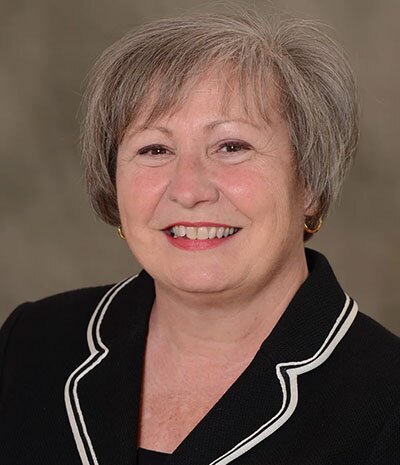
Paula Reichle
- Sparrow Health Senior VP & CFO
Advisory Board Spotlight
The Future of Health Systems in a Shifting Business Environment
What You'll Learn
The M.S. in Healthcare Management program will address the study, application and research of healthcare management within a solid business framework.
The interdisciplinary curriculum grounds students in healthcare-specific courses such as:
- Economics
- Law
- Information systems
- Marketing
- Supply chain management
- Human resource management
- Strategic decision making
- Analysis and planning
- Effective negotiations
This multifaceted approach to healthcare management thoroughly equips students with business-centered healthcare knowledge and skills in:
- Critical thinking and innovation in healthcare
- Communications and interpersonal effectiveness
- Analysis and problem solving
- Economic policy and information systems
- Population health and patient experience
- Healthcare law and policy
- Global health care and the impact of globalization
- Analytics in Healthcare
Graduate Certificates
MSU provides more ways to advance your healthcare education with two specialized graduate certificate programs: the Graduate Certificate in Healthcare Compliance and the Graduate Certificate in Healthcare Leadership.
Both programs can be completed in ten credit hours, with four required courses and the choice of one (or more) elective.
- Healthcare Compliance examines topics in healthcare regulations, enterprise risk management, healthcare compliance and compliance systems.
- Healthcare Leadership is focused on strategic decision making, market analysis and planning, negations and leadership.
These options can be completed in addition to earning the Master of Science in Healthcare Management. They also allow the opportunity to gain targeted knowledge in a specific field of interest and pursue advancement without committing to a full graduate degree.
Explore the MS-HCM Capstone Course
MS-HCM courses are five weeks and must be taken in succession.
Nationwide job growth for Medical and Health Services Managers is projected to grow by 28% between 2021 and 2031.*
*Bureau of Labor Statistics, U.S. Department of Labor, Occupational Outlook Handbook, Computer and Information Technology [May 10, 2023]. U.S. Bureau of Labor Statistics Medical & Health Service Managers. National long-term projections may not reflect local and/or short-term economic or job conditions, and do not guarantee actual job growth. [Degree or Certificate] program options do not guarantee career or salary outcomes. Students should conduct independent research for specific employment information.
Who Should Enroll
The demand for professionals with healthcare and business knowledge is high. The M.S. in Healthcare Management is designed to transform healthcare professionals into tomorrow’s leaders and help provide a path for career advancement. Professionals throughout the industry should enroll, including:
- Experienced healthcare managers with a drive to be a leader in the field
- Doctors, nurses, mental health professionals and allied health professionals looking to move into a healthcare management role
- Healthcare professionals seeking to expand their earning potential
- Experienced professionals with a drive to step into a healthcare management role and be a leader in their field
- Aspiring professionals across industries seeking to make a shift into healthcare management
- Click here for admissions details
Already started your MSU Online application? Click here to login.
Frequently Asked Questions
- What is a Master’s in Healthcare Management, and how does it differ from an MHA or MBA in Healthcare?
Michigan State’s Master’s in Healthcare Management is a 100% online, 34‑credit, non‑thesis master’s degree designed to build leadership and business acumen specifically for healthcare settings, completed in about 21 months. Unlike an MHA, which is deeply rooted in healthcare administration and often accredited by CAHME, an M.S. in Healthcare Management is housed within a business school and emphasizes management, strategy, finance, and compliance through a healthcare lens. In contrast to a healthcare‑focused MBA, the M.S. in Healthcare Management focuses directly on healthcare‑specific leadership rather than general business education.
- Is a master’s in healthcare management worth it?
Yes, the Master’s in Healthcare Management program equips professionals with essential leadership, strategic and operational skills tailored to healthcare systems, offering a targeted pathway to advancement. U.S. Bureau of Labor Statistics projects a 28% growth in demand for health services managers from 2022–2032, underscoring high market demand. A Master’s in Healthcare Management from Michigan State University is ranked among the top online master’s degrees in healthcare administration nationally, enhancing ROI potential.
- What jobs can I get with a master’s in healthcare management?
Graduates commonly pursue jobs such as medical and health services manager, healthcare consultant, department administrator, or operations manager in hospitals, clinics, payers, or health systems. Our advisory board of industry professionals provides real‑world insight and networking that helps connect students to career opportunities.
- What is the average salary after earning a healthcare management master’s?
Common national salaries for roles such as healthcare administrator or services manager average around $109,000 annually, with executives and consultants earning even more. MSU’s top‑ranked online format and career services further enhance placement into high-paying roles.
- Do I need a healthcare or clinical background to apply to the master's in healthcare management program?
No prior clinical or healthcare background is required to apply for the master’s in healthcare management at MSU; our program is open to professionals across industries and disciplines. Admission requires a bachelor’s degree with a minimum GPA of 3.0. Applicants come from clinical fields such as nursing or allied health, general business or even non‑clinical professionals.
- Is the master's in healthcare management program offered online or part-time for working professionals?
The M.S. in Healthcare Management is entirely online, structured over approximately 21 months, making it an ideal experience for your work-life balance! The asynchronous format and flexible pacing accommodates full‑time jobs, allowing our students to complete the 34‑credit degree without relocating or pausing their careers.
- How long does it take to complete a Master’s in Healthcare Management?
This program typically spans around 21 months of online study, covering 34 credits. Some students may move faster if they take heavier course loads or receive transfer credits, but the standard structure is paced to balance rigor with working‑professional schedules. Additionally, there is no thesis requirement, instead, our students complete a capstone.
- What’s the difference between public health and healthcare management degrees?
Public health programs train graduates for roles in health promotion, research, and policy at community or governmental levels, while healthcare management prepares students for executive or operational leadership within health systems. Healthcare management centers on running and improving the organizations that deliver care.