- Kelly Ulrich
- Communications Manager II
- ulrichk1@msu.edu
- (517)-353-7123



Rebecca Mitchell, Ph.D. in Organizational Behavior
Pursuing a Ph.D. is more than just earning a degree. It’s about finding the right environment to grow as a scholar, researcher, and colleague. Rebecca Mitchell, who earned her Ph.D. in organizational behavior from the Broad College of Business at Michigan State University, found that foundation in East Lansing. Now an assistant professor at the University of Colorado Boulder, she reflects on how MSU’s program shaped her journey and offers insights for prospective students looking to launch their own academic careers.
What led you to pursue a Ph.D. in organizational behavior, and why MSU?
I was exposed to organizational behavior research late in my undergraduate years, but it captured my interest right away. After a short time in a corporate job that didn’t fit me, I decided to pursue a Ph.D. A mentor at the University of Michigan, James Walsh, introduced me to faculty at MSU, and I knew I’d find strong mentorship and support there. The students and alumni I spoke with also spoke highly of the program’s training and culture.
My dissertation on internal comparisons came from me trying to piece together everything I was interested in and communicate it in such a way that the audience would understand why it’s important. I was able to pursue the work because John Hollenbeck, who was an influential mentor for me, was willing to work with me to figure out how to do it. His willingness to follow me down this path was crucial in developing my Internal Comparisons Theory, which I now use in my work today.
What aspects of the MSU program had the biggest impact on you?
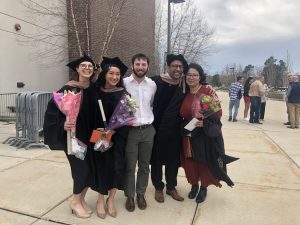
Mitchell (left) with her cohort mates
The collaboration stood out. I had the chance to work with almost every faculty member in the program, which exposed me to a wide range of research projects and styles.
That direct relationship with faculty is something that I think is unique to Broad. Working with mentors like John Hollenbeck, Nick Hays, Quinetta Roberson, Brent Scott, and others helped me find my own research path.
The cohort community is also incredible. There is a strong culture of senior students mentoring junior students, and I developed so many close relationships that I still have today.
I also appreciated how many bridges there were out to other colleges at MSU during my program. If there was something you were looking for that wasn’t in Broad, you could find it somewhere else on campus. One example of that for me was my minor in Industrial/Organizational Psychology. Not only is there an extremely strong Management department, but the I/O Psych program has amazing faculty as well. As a Ph.D. student, you get to tap into both – taking classes and collaborating with I/O Psychology faculty and Ph.D. students.
How did MSU prepare you for your faculty role at CU Boulder?
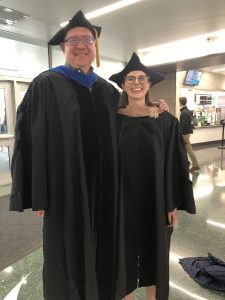
John Hollenbeck, associate dean of research & doctoral programs, and Mitchell
The program’s rigor and focus on building quantitative skills through hands-on learning have been invaluable. I’ve been able to immediately contribute to the Ph.D. program at the University of Colorado Boulder because I’ve already had practice in doing hands-on data analysis. That’s not something that every program offers. I also graduated into a pretty tough job market. MSU did a great job of preparing me for job hunting. My faculty mentors were so helpful in providing guidance and personal recommendations to get me in the door.
What advice would you give to prospective Ph.D. students?
Curiosity and resilience are essential. You don’t have to know exactly what you want to study when you begin, but you need to be curious enough to explore questions deeply and resilient enough to handle setbacks and tough feedback inherent to the research process. I also tell students to look for programs with 2-3 faculty members that they want to have a mentoring relationship with. Mentorship was such a big part of my journey, and I think it’s a large part of how I ended up where I am now.
Why is investment in research important?
For me, research is about knowing the difference between what’s true and what’s just an anecdote. Evidence-based findings give us a foundation for understanding what makes a good team, an effective leader, or meaningful goal progress. Without that foundation, we’re just throwing darts at a problem and hoping something sticks.
It’s also really important when we think about broader social change. If no one is asking the questions, then no one will find the answers. What excites me is how much of our research is directly and practically applicable, like figuring out how to reduce burnout among critical care nurses. That kind of evidence has an immediate impact on real people and organizations, and we need researchers who are equipped to tackle those really difficult, complex problems.
Media Contact:
In Other News:
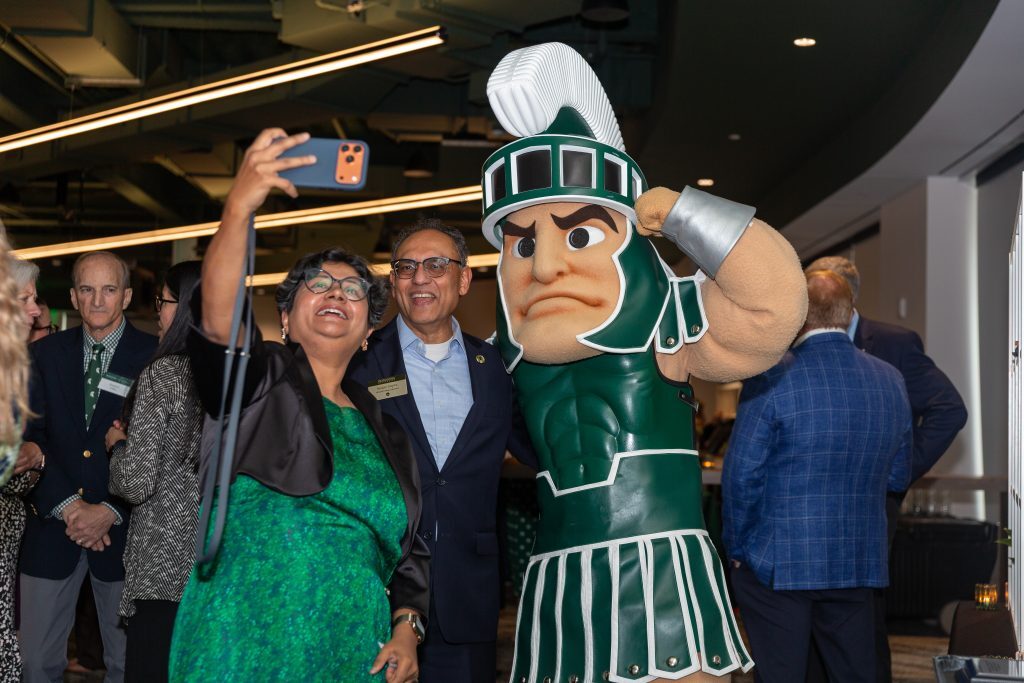
Each year, the college honors exceptional alumni and friends at the annual Celebrate Broad event
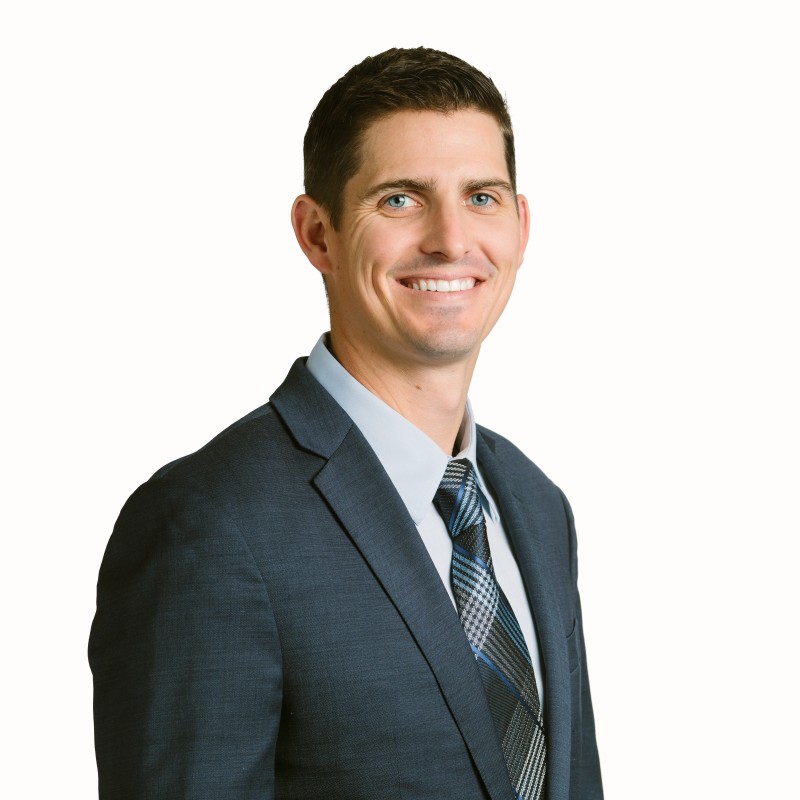
The film follows Justin Murray’s path to becoming president of SignComp in Grand Rapids
The Eli Broad College of Business will welcome Chris Feuell as the Spring 2026 commencement speaker
Get Connected with Broad:
- Business College Complex
- 632 Bogue St
- East Lansing, MI 48824