- Kelly Ulrich
- Communications Manager II
- ulrichk1@msu.edu
- (517)-353-7123


At the Broad College of Business, innovation in curriculum is more than a goal; it’s a commitment. One course that exemplifies this is FI355: Financial Modeling, taught by Jon R. Taylor, fixed-term faculty in the Department of Finance. Designed for upper-level undergraduates, this hands-on, flipped-format class is a standout example of experiential learning, a cornerstone of Broad’s strategic mission.
A flipped classroom built for real-world finance

FI355: Financial Modeling is taught by Jon R. Taylor, fixed-term faculty in the Department of Finance.
FI355 is not your typical finance class. There are no lectures. Instead, students prepare independently before each session by completing readings and quizzes online. When they arrive in class, they dive straight into collaborative casework, applying their knowledge to build financial models in Excel.
The course is held in one of MSU’s R.E.A.L. (Rooms for Engaged and Active Learning) classrooms, innovative learning environments designed to foster active participation and teamwork. FI355 takes full advantage of this space, which features eight tables, each seating four students. Each table is equipped with technology that allows students to plug in their laptops and project their work onto a screen above their station, making their progress visible to both teammates and Taylor. This setup enables real-time feedback and encourages accountability, as students work together to solve complex financial problems in a transparent, collaborative setting.
This immersive structure supports the flipped model perfectly, turning the classroom into a dynamic workspace where students are constantly learning, doing, and refining their approach.
Group work is central to FI355, accounting for 35% of the final grade. While many business courses include group projects as a component of assessment, collaboration is the foundation of this class. Students are expected to bring their A-game to every session, arriving fully prepared to contribute, problem-solve, and lead. With no traditional lectures, the classroom operates more like a workplace, where Taylor acts less like a lecturer and more like a manager, setting objectives and expecting results. “Members are expected to prepare, plan, engage, listen, participate, and lead,” Taylor said.
To support effective collaboration, Taylor uses the CATME platform, a web-based tool designed to enhance student teamwork. CATME’s Team-Maker Survey allows him to form balanced and compatible groups based on key factors like leadership style, availability, and work habits. After each module, students evaluate their peers anonymously using CATME’s Peer Evaluation Survey, which assesses contributions across five dimensions of teamwork, including communication, accountability and quality of work. These evaluations not only influence grades but also help students reflect on their roles within a team, reinforcing the course’s emphasis on professional collaboration.
Learning by doing, with industry partners
During the week of Oct. 6, students had the opportunity to work directly with General Motors (GM), which facilitated a confidential simulation exercise. While the details of the simulation remain private, the presence of GM professionals added a layer of authenticity and urgency to the classroom experience.
Among the GM representatives was George Spillson, a financial analyst who previously served as a teaching assistant for FI355 during his time at MSU. Spillson emphasized the importance of communication and critical thinking in financial modeling. “15% of this work is answering problems,” Spillson said. “But 75% of it is being able to describe your conclusions and detail why you did what you did to get your solution.” Spillson also noted that the casework students tackled in class mirrored the exact tasks he had completed for his work team earlier that same day, highlighting the course’s real-world relevance.
Guided independence and immediate feedback
Taylor’s teaching philosophy blends hands-on engagement with strategic restraint. He encourages students to wrestle with problems before stepping in, allowing them to develop resilience and deeper understanding. “Sometimes mistakes are good,” Taylor explained. “Maybe later on that mistake comes up again, and now you can learn from it, just like in a real-world work scenario.”
Throughout each session, Taylor rotates among groups, observing how students think, ask questions, and evolve their approach. As he put it, “Each day’s questions are unpredictable and different. I can’t predict what they’ll ask, and sometimes their questions even stump me. As you are doing the rotations to each group, you see how they ask their questions, think on it, and by the time you get back to them, they have a new set of questions for you.” The unpredictability is part of the magic. It’s not just students who are participating in experimental learning. Taylor sees the course as an experiment in teaching itself, constantly adapting to the needs and insights of his students.
Experiential learning at its core
Students consistently describe FI355 as one of the most challenging, and most impactful, courses they’ve taken at Broad. Many cited the class as a turning point in their academic journey. “I wish I took this class before my internship year,” said Margaret Murphy, a finance senior.
With enrollment capped at around 40 students, demand for the course is high. The intimate class size allows for deep engagement, personalized feedback, and a strong sense of community.
FI355 is an example of Broad’s strategic commitment to experiential learning, a philosophy that emphasizes doing, reflecting, and growing through real-world engagement. As outlined in the Broad College’s strategic plan, enhancing undergraduate programs through curriculum integration and participative learning experiences is a key initiative. FI355 embodies this vision by transforming the classroom into a collaborative, hands-on environment where students build financial models, solve complex problems, and learn from industry professionals.
But as Taylor reminds us, experiential learning isn’t limited to specialized courses. “You don’t just need to have classes specifically designed like ours to do experiential learning,” he said. “Have a CEO talk to your class, have your students interview industry professionals they aspire to be like. Experiential learning can be a part of any class.”
Media Contact:
In Other News:
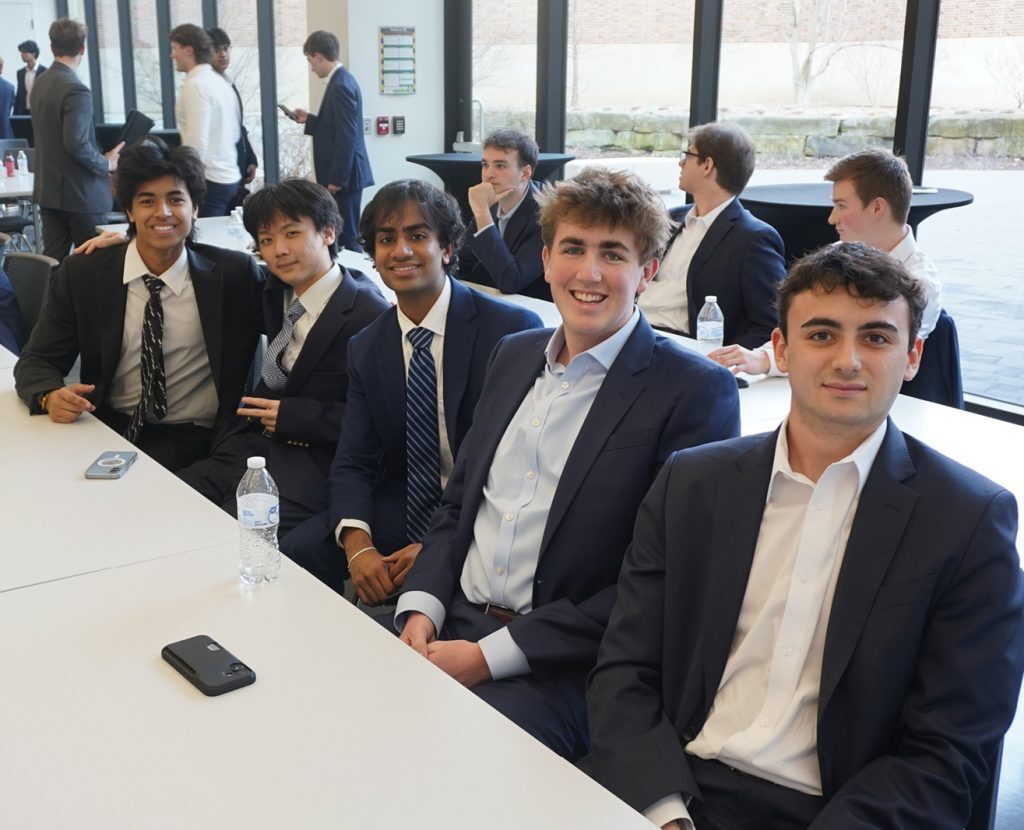
The Broad College of Business hosted the second annual Private Equity Case Competition on Apr. 3.
Enna Fretz is a senior majoring in marketing with a minor in entrepreneurship and innovation at Broad

Jacob Dunham is a senior majoring in supply chain management at the Broad College of Business.
Get Connected with Broad:
- Business College Complex
- 632 Bogue St
- East Lansing, MI 48824