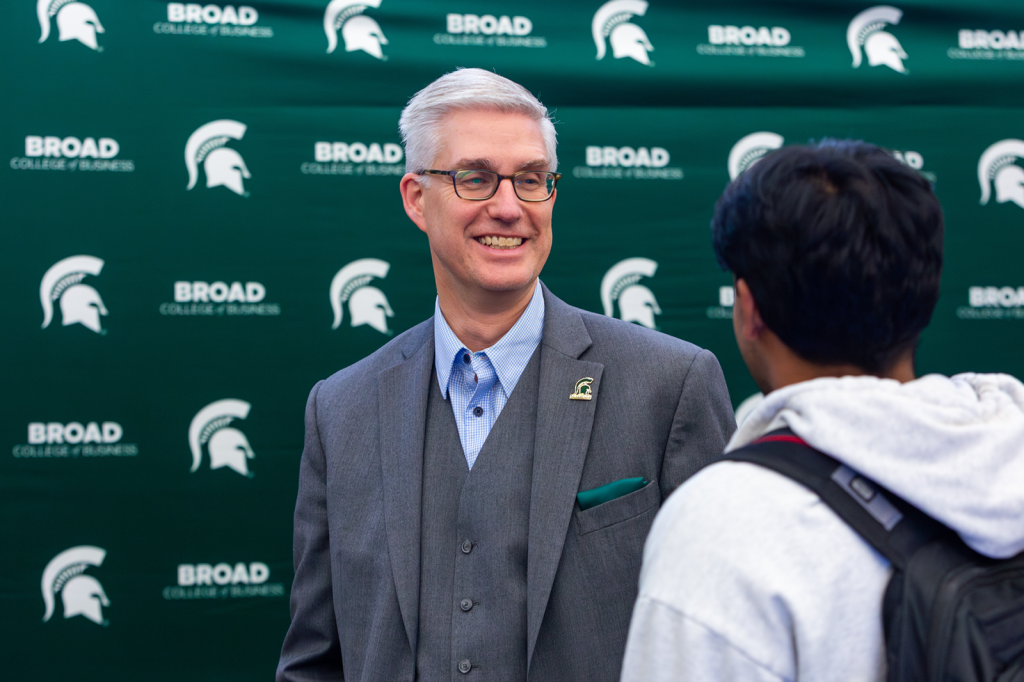
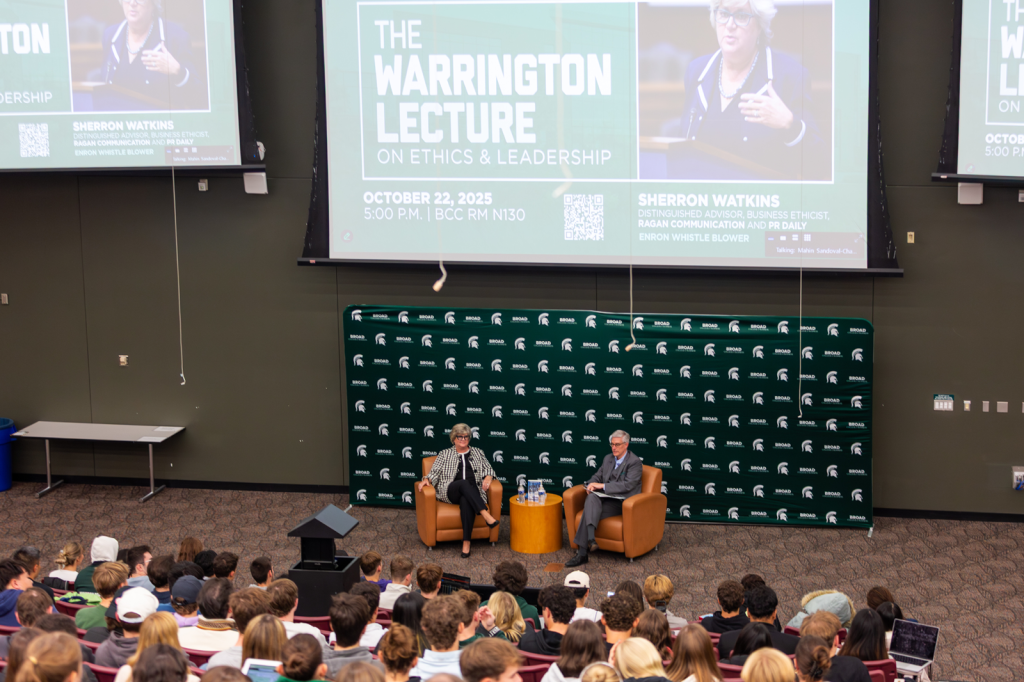
The event was facilitated by David Souder, the Eli and Edythe L. Broad Dean, whose opening remarks framed the conversation around courage, accountability, and the role of leadership in shaping ethical culture.
Watkins began by recounting her decision to raise concerns internally, and the isolation she felt in doing so. She described the frustration of mentioning her concerns to colleagues, some of whom were senior to her, and being met with dismissal or silence. Despite the resistance, she eventually found the courage to request a meeting with the C-suite to present what she had uncovered. Looking back, she offered candid advice to future whistleblowers: never go in alone, document everything, and seek out trusted allies who can help amplify the message. Watkins emphasized that ethical challenges often arrive without warning, and having a plan of action, and a support network outside the organization, is essential.
“I shouldn’t have gone in by myself that week,” Watkins said. “There were executives higher than me who had the same information. If I had gone in with at least three of them, we might have had a different outcome.”
She continued, “My warnings were too little, too late. But there was a slim chance Enron could have survived if they had restated the financials and done the right thing by telling shareholders what was going wrong.”


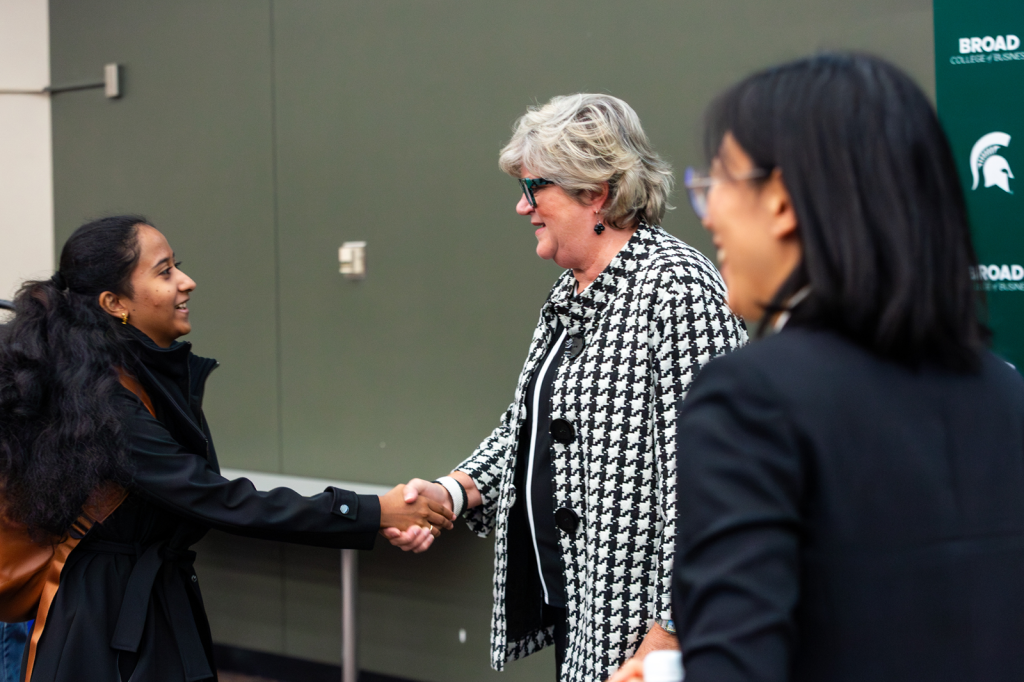
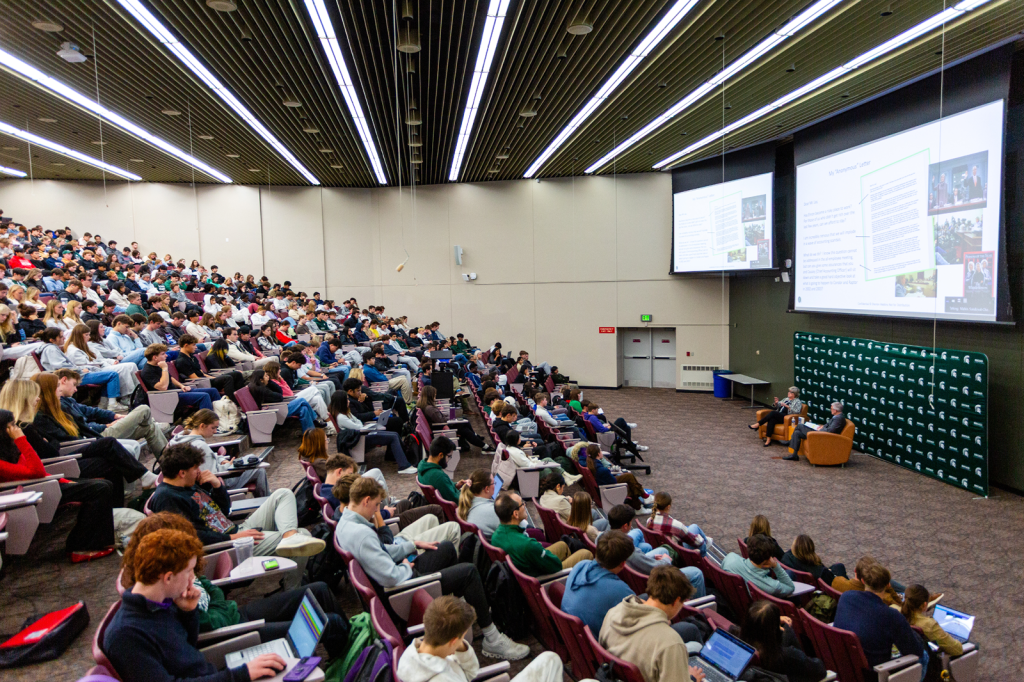 Broad welcomed Sherron Watkins, former vice president of corporate development at Enron, as the featured speaker for the 2025 Sylvan T. Warrington Visiting Lectureship in Ethics and Leadership.
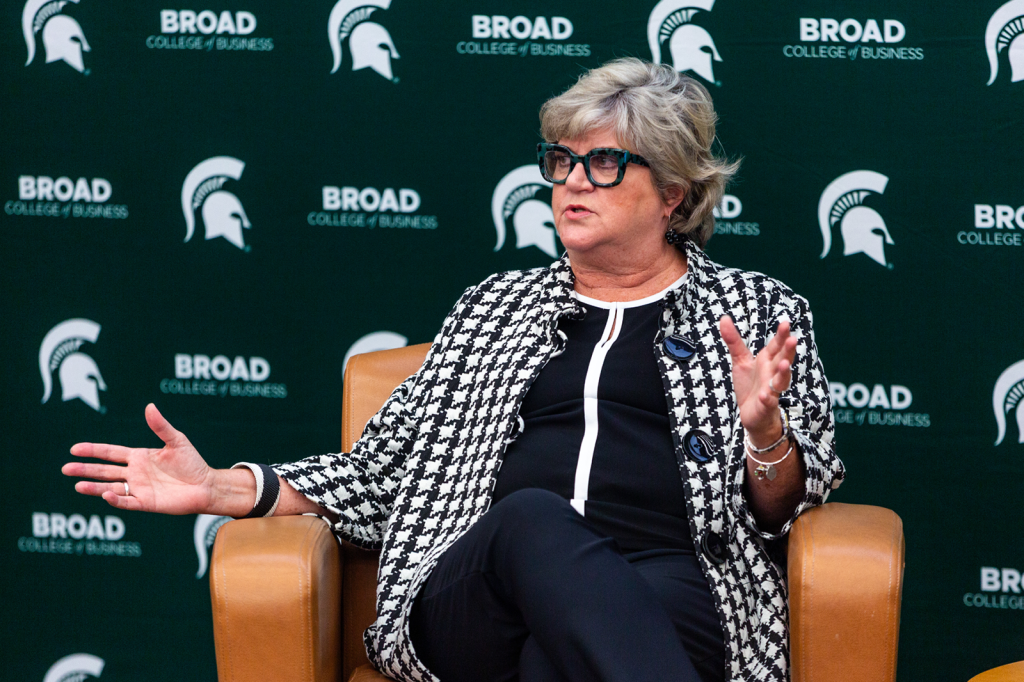 Watkins is widely known as the whistleblower who alerted Enron’s CEO to accounting irregularities in the months before the company’s collapse. Her internal memo became a defining moment in one of the largest corporate fraud cases in U.S. history.