The group’s presentation highlighted the rise of generative AI and the implication for institutions to be conscious of the increased risk of plagiarism among students. However, with academic platforms such as Turnitin, plagiarism checks can sometimes flag false positives. International and multilingual students face a heightened risk of being accused of academic misconduct because of their genuine, but simple, English — which can read as if it’s been generated by AI.
“Our team’s purpose is to advocate for multilingual students along with bringing awareness to the challenges that they may face. Plagiarism accusations are serious for any student, but especially for international students who risk losing their visa or scholarship. As international and multilingual students ourselves, this research is not just a ‘to-do’ that we want to check off our checklist, but rather an important and personal one. We’ve experienced a lot of these challenges firsthand, and our goal is to shed light on them,” Mady said.
The students’ research illuminates personal experiences that they are determined to transform. The showcase serves as a critical steppingstone for this group and many others, providing a platform to articulate their concerns and anxieties to MSU faculty, staff and leaders.
“Our team has highlighted several cultural issues within the academic sphere before, but this is our first time venturing into the recently developed AI topics. We hope to gain more information through interviews with qualified experts and testimonials from our affected peers,” Mady said.
Hasnol added, “Some other cultural issues that we talked about was the use of metaphors within classroom environments that can cause alienation and confusion among international students as the metaphors are specific to domestic students and are American-centric; i.e., American football. Metaphors are used to facilitate learning within classrooms, but unfortunately, when faculty members don’t consider the different cultural backgrounds that students possess, it forces these students to engage in ‘double learning’ to understand the lecture.”


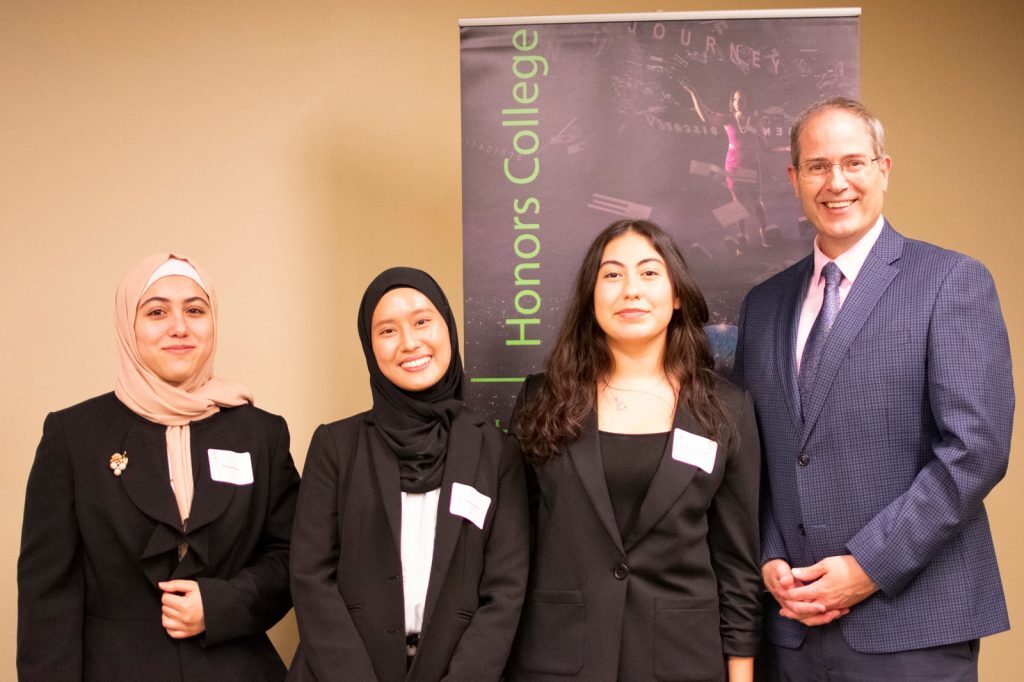 Chris Long (right), dean of the College of Arts and Letters and the Honors College, poses with supply chain management students Shahed Mady (left) and Vivian Martinez-Sandoval (right) and psychology student Nadiah Hasnol (center). This team won the Preliminary Research Award for Research in Progress and a $300 cash prize for their presentation, titled “Exploring the Implications of AI in Plagiarism Detection Software for International and Multilingual Students.” (Photo courtesy of MSU Honors College)
 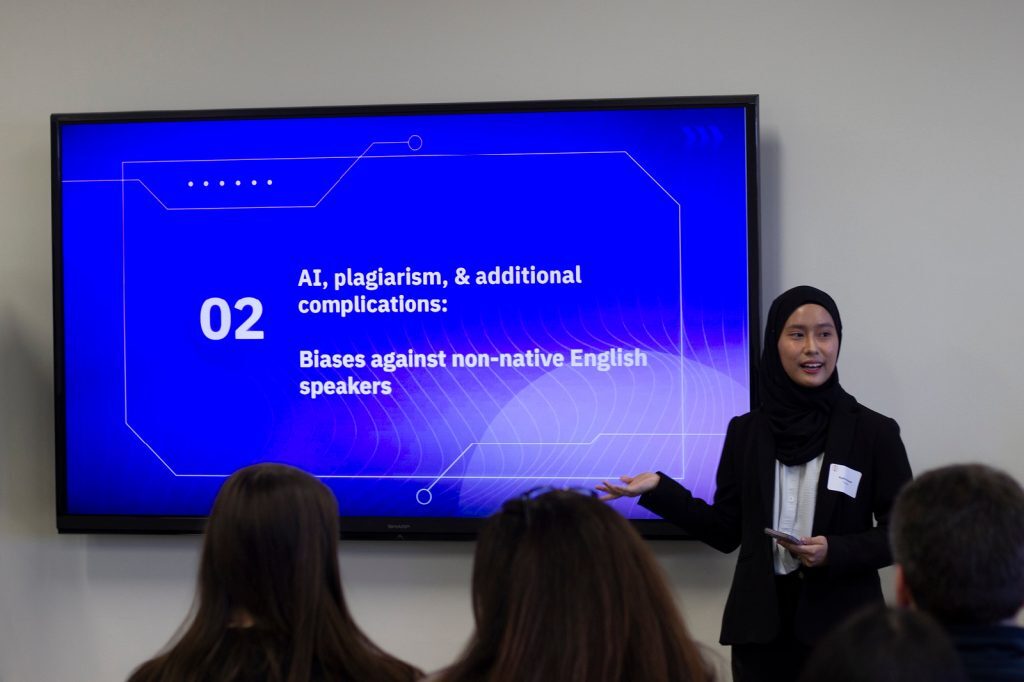 The group’s presentation highlighted the rise of generative AI and the implication for institutions to be conscious of the increased risk of plagiarism among students. However, international and multilingual students face a heightened risk of being accused of academic misconduct because of their genuine, but simple, English — which can read as if it’s been generated by AI. (Photo courtesy of MSU Honors College)
 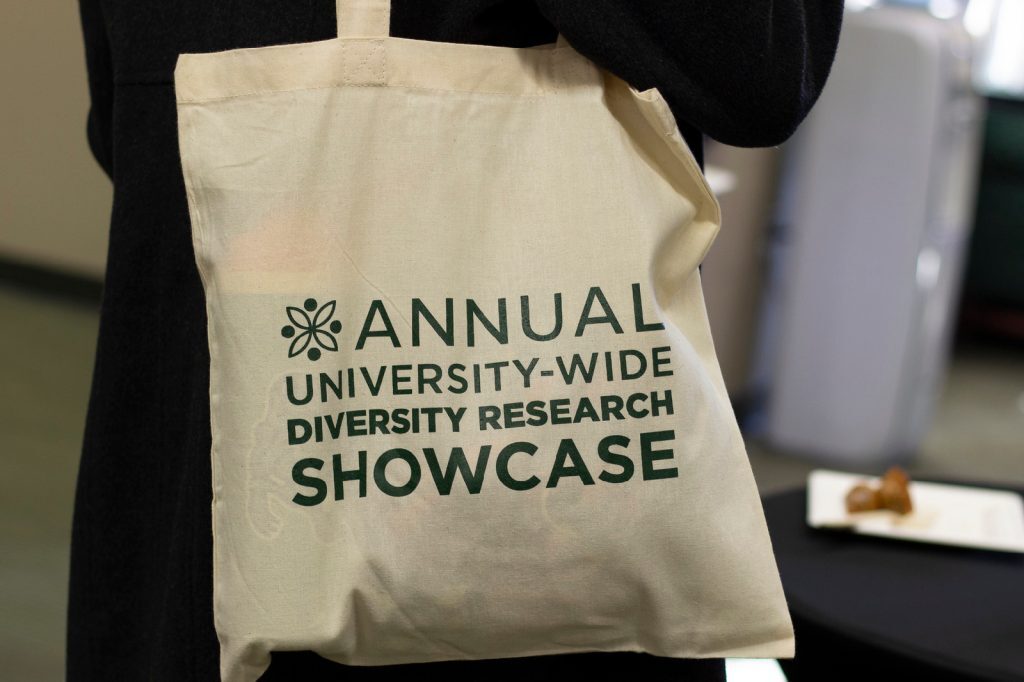 The 7th annual Diversity Research Showcase was part of Michigan State University’s Dr. Martin Luther King Jr. Commemorative Celebration. The showcase recognizes undergraduate student work across disciplines studying issues of diversity, equity and inclusion. (Photo courtesy of MSU Honors College)
 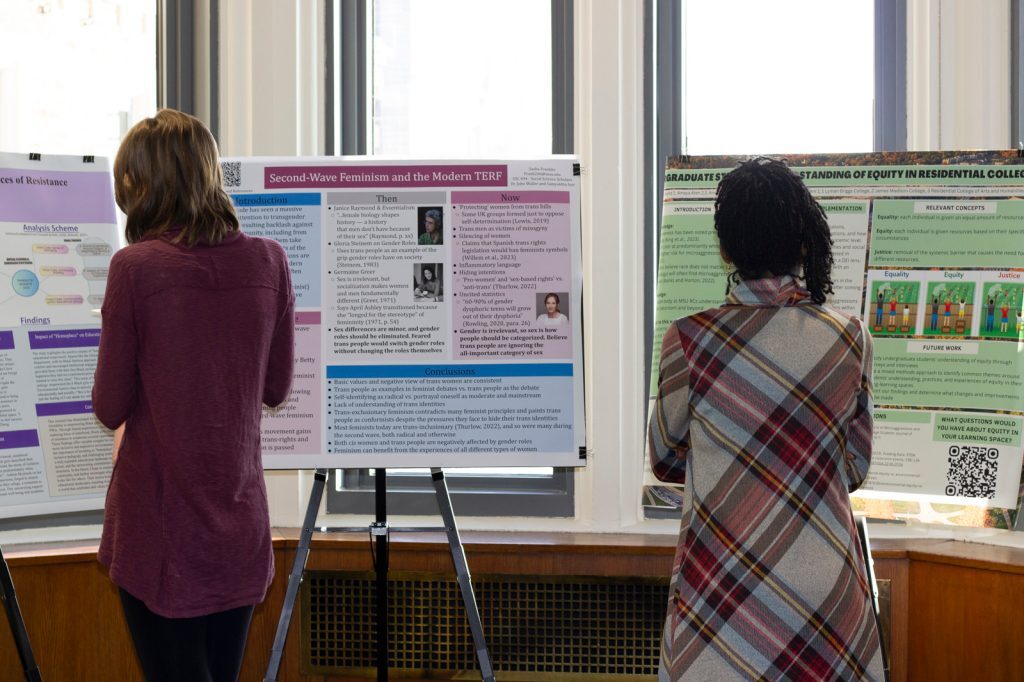 The showcase featured work across a range of topics and disciplines. Other Broad teams who participated presented research on sustainability perceptions across gender, generation and occupation type among hotel employees, communication efforts of DEI in the hospitality industry and a comprehensive exploration of service inclusion for physical disabilities in the hospitality industry. (Photo courtesy of MSU Honors College)